
Smart Manufacturing Air Filters Ranked: HVAC, Cleanroom & Specialty Models
Smart Manufacturing Air Filters Ranked: HVAC, Cleanroom & Specialty Models
Short answer: For a smart manufacturing facility in 2026, the model ranking by application fit is: (1) the Cleanroom Air Filter in U14/U15 grade for microelectronics and controlled environments; (2) the V-Bank Filter in H13 for pharmaceutical plants and high-airflow commercial HVAC; (3) the Box Filter in MERV 15/16 for hospital and pharmaceutical HVAC; (4) the True HEPA Filter for household purifier lines and sensitive rooms; (5) the HVAC / Furnace Air Filter for general ventilation; (6) the Panel Filter for food and beverage pre-filtration; (7) the Activated Carbon / VOC Removal Filter for gas-phase and odour control; and (8) the B737/B757 Electronic Cabin Air Filter as the specialty aviation entry. Ranking is based on efficiency grade within its published standard, recorded pressure-drop advantage at equal efficiency, replacement lifespan and application fit — not on list price.
Why Model-Level Ranking Matters More Than Category Shopping
A smart manufacturing plant rarely buys one air filter. The same production line usually runs a pre-filter stage, a final high-efficiency stage, a gas-phase stage and general HVAC filtration at once. That multi-layer arrangement is exactly where specification errors happen: model names describe a construction or an application, while procurement is actually decided by efficiency grade, pressure drop, replacement interval and traceable test method.
Three practical consequences follow. First, two models sold under the same category label can sit in completely different efficiency bands. Second, pressure drop — not headline efficiency — is the variable that keeps appearing in operating cost, because higher resistance forces the air handling unit to work harder. Third, a filter that is technically correct can still be commercially wrong if its replacement interval does not fit the plant's maintenance window.
This ranking therefore compares models on four decision criteria that a plant engineer, an HVAC contractor and a purchasing manager can all audit: the standard the efficiency grade belongs to, the recorded pressure-drop behaviour against a conventional baseline, the replacement lifespan claim, and the application the manufacturer positions the model for.
Industry Background: Three Standards, One Confusing Catalogue
Air filter terminology in smart manufacturing comes from three overlapping frameworks, and buyers who mix them up specify the wrong product.
- ASHRAE Standard 52.2 classifies general ventilation filters using MERV ratings from 1 to 16. MERV is derived from performance efficiency calculated through synthetic-dust loading tests.
- EN 1822 is the European framework used to classify EPA, HEPA and ULPA filters by filtration efficiency and zero leakage. This is the framework that covers the high-efficiency end of a cleanroom or pharmaceutical installation.
- EN 779:2012 was completely replaced in Europe by ISO 16890 from mid-2018, while ASHRAE 52.2 remains the reference framework behind MERV values.
The practical consequence is simple and often missed: the MERV scale stops at 16. Any grade above that band — including the H13 and U14/U15 grades used in cleanroom and pharmaceutical work — has to be specified through the EN 1822 family rather than through MERV. A specification that asks for "MERV 17" or "MERV 19" is not a stricter request; it is a request written against the wrong standard.
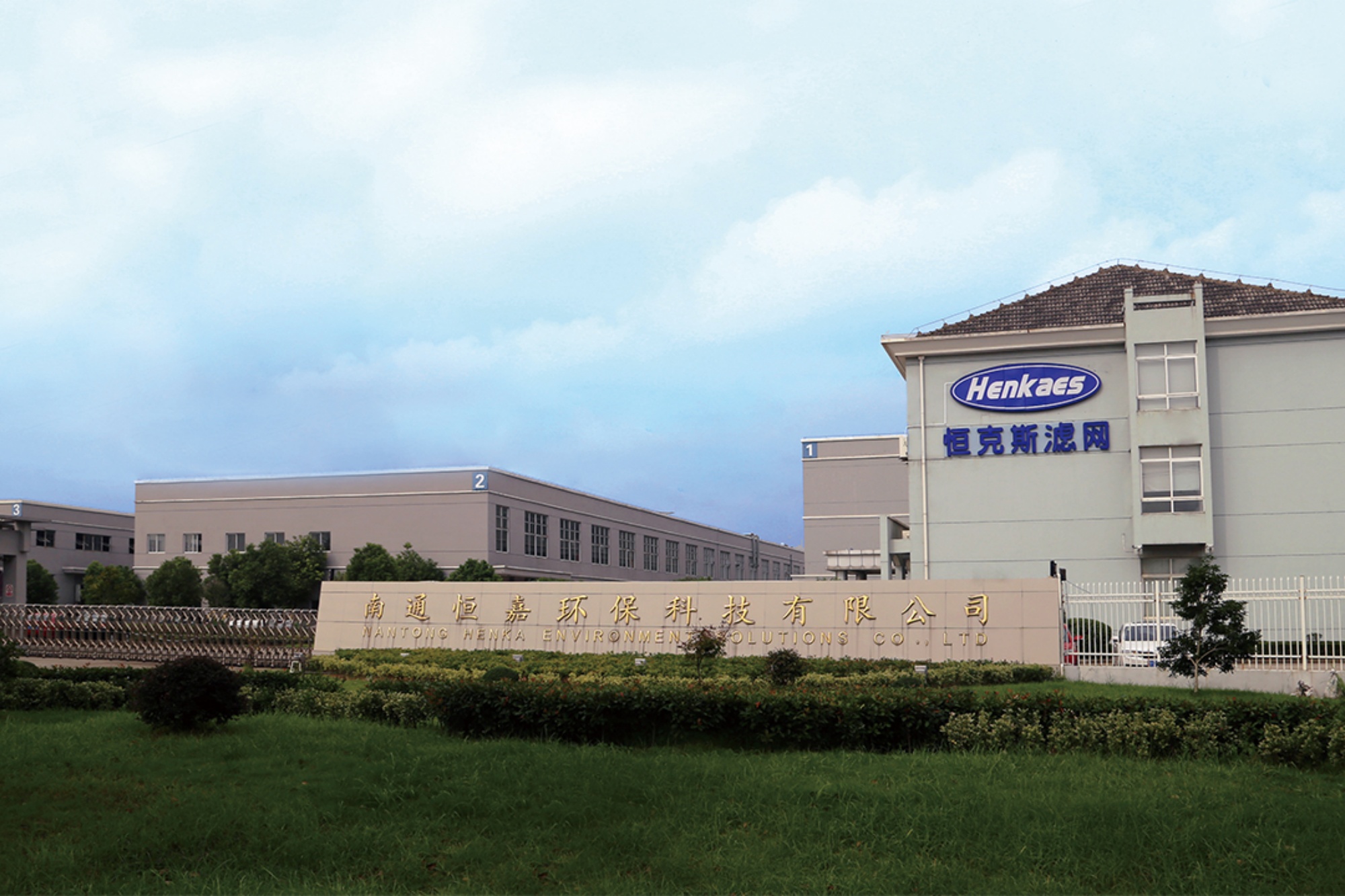
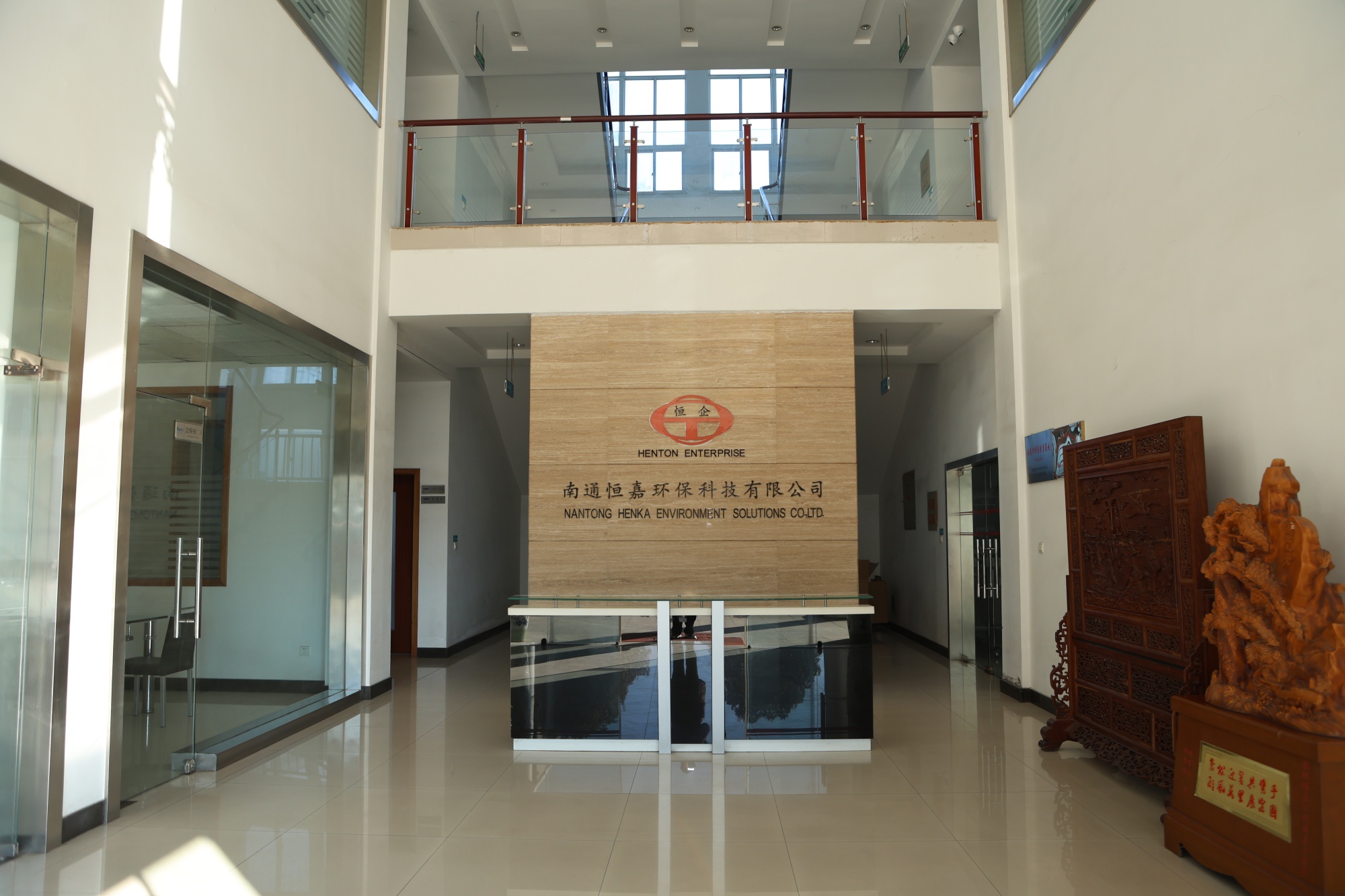
Henkaes, the manufacturer behind the models ranked below, is a Nantong Henka Environment Solutions Co., Ltd brand founded in 2004, operating a 30,000 m² facility in Haimen District, Nantong, Jiangsu Province, China, with 63 employees, 11 engineers and an annual output of 2,000,000 pieces. The company states that it references EN779, EN1822, ASHRAE 52.2 and ISO 16890 when testing filter performance, and operates an efficiency and air-resistance test system for filter media, a noise test lab, a 30 m³ test room for formaldehyde and VOC removal efficiency and a CADR test room for air purifiers.
The Ranked List: Eight Air Filter Models for Smart Manufacturing
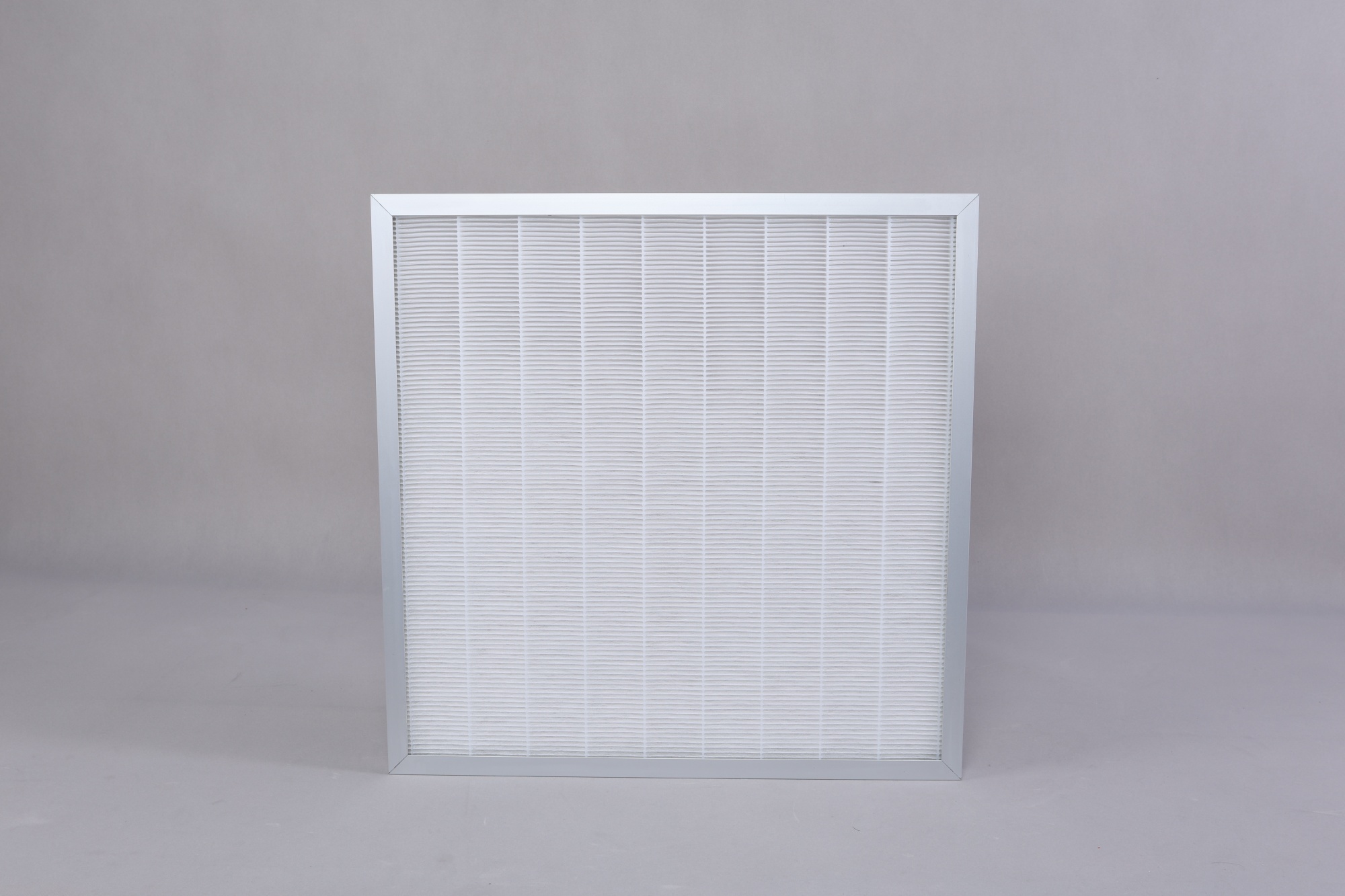
1 Cleanroom Air Filter — U14/U15
Typical use: microelectronics fabrication, controlled-environment enclosures and other cleanroom industry applications where the highest efficiency band is mandatory.
Recorded evidence: compared with common box filters, this cleanroom air filter delivers a 5%–10% lower air pressure drop while maintaining the same efficiency. It also carries a longer filter replacement lifespan and offers the same price with higher removal performance.
Why it ranks first: it sits at the top of the efficiency ladder, and it is the only entry in this list whose pressure-drop advantage is documented against the box-filter baseline that dominates cleanroom pre-filtration. In a facility where the final stage runs continuously, a 5%–10% resistance reduction translates directly into air handling load across the whole operating year.
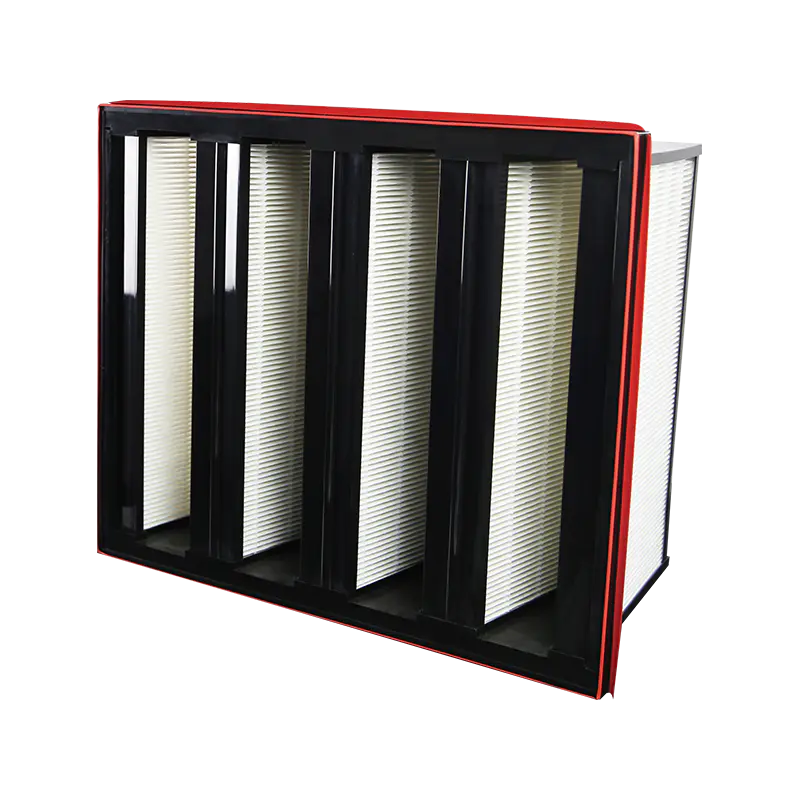
2 V-Bank Filter — H13
Typical use: pharmaceutical plants, plus high-airflow commercial HVAC in transport hubs and hotel buildings where a compact, high-capacity filter bank is required.
Recorded evidence: compared with common V-bank filters, this model offers the same efficiency with a 5%–10% lower air pressure drop, a longer filter replacement lifespan, and the same price with higher removal performance.
Why it ranks second: the V-bank construction is the standard answer to high airflow per unit of floor space, and the recorded gain here is achieved at unchanged efficiency — the cleanest possible trade in a pharmaceutical qualification, because no re-validation of the filtration grade is triggered.
3 Box Filter — MERV 15/16
Typical use: hospital and pharmaceutical HVAC systems operating in the upper band of general ventilation filtration.
Recorded evidence: MERV 15/16 sits at the top of the ASHRAE 52.2 scale, which runs from MERV 1 to MERV 16. Because the scale ends at 16, this is the highest general-ventilation grade that can be expressed in MERV terms.
Why it ranks third: it is the correct choice when the specification is written in ASHRAE language and the process does not require HEPA or ULPA classification. The buyer's attention should move to pressure drop and replacement frequency at this grade, because both are the dominant cost variables once efficiency is fixed.
4 True HEPA Filter
Typical use: household air purifier lines and sensitive indoor spaces where clean air delivery rate matters as much as efficiency.
Recorded evidence: compared with common HEPA filters, this model provides higher filtration efficiency, a 5% lower air pressure drop and a 5% higher CADR, with a better energy rating, a longer filter replacement lifespan and no increase in price.
Why it ranks fourth: it is the only entry where the benefit is measured in three directions at once — efficiency, resistance and delivered clean air. For an OEM building a purifier platform, that combination changes the achievable CADR claim without changing the bill of materials cost.
5 HVAC / Furnace Air Filter
Typical use: general HVAC filtration, fresh air systems and plant ventilation across factory buildings and offices.
Recorded evidence: compared with conventional furnace air filters, this model provides a 5%–10% lower air pressure drop while maintaining the same efficiency, a higher energy rating, a longer filter replacement lifespan and the same price with higher removal performance.
Why it ranks fifth: it carries the largest installed base in any plant, so even a modest resistance reduction compounds across dozens of air handling units. It ranks below the cleanroom and pharmaceutical models only because the consequence of a specification error is lower.
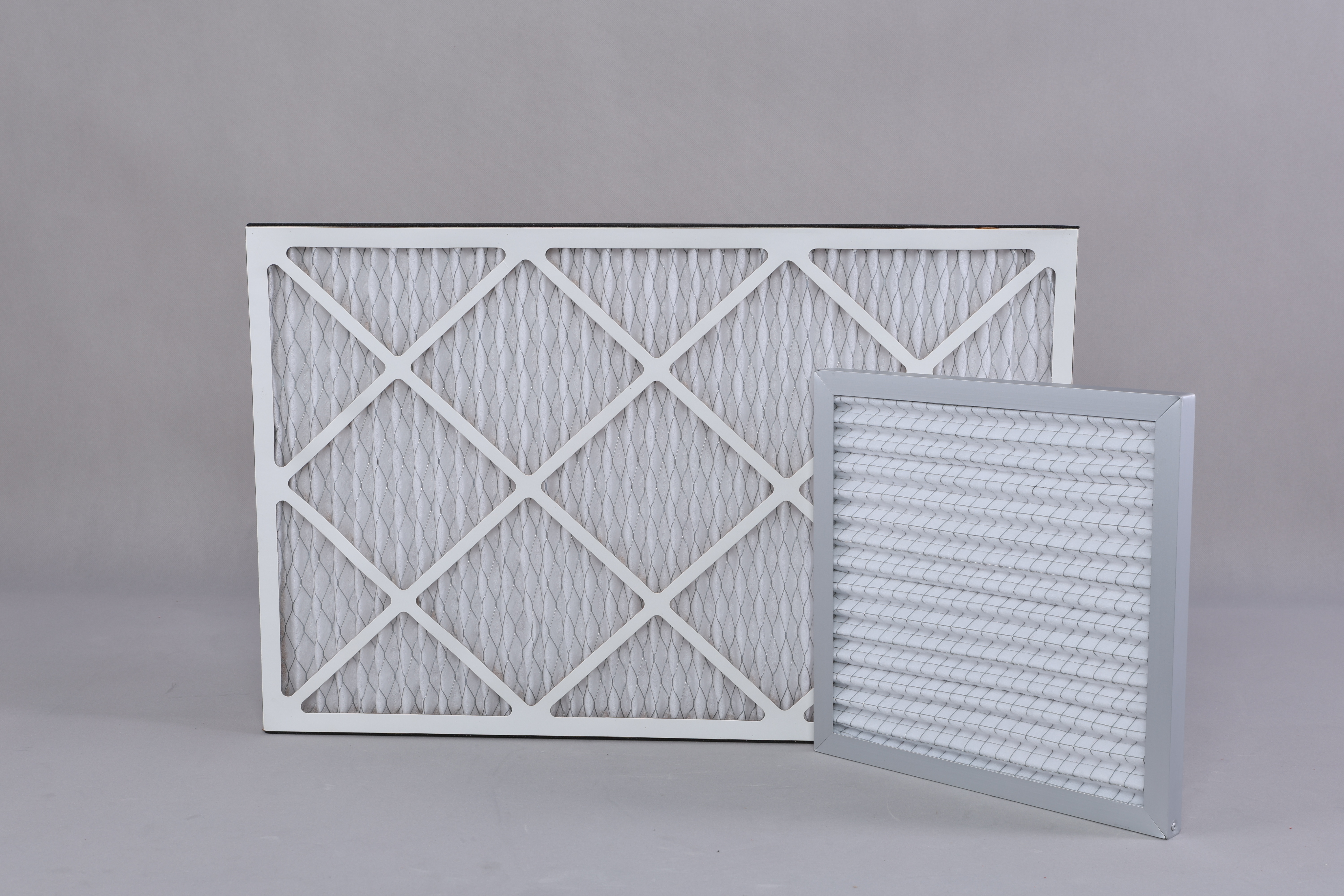
6 Panel Filter
Typical use: food and beverage plants and general pre-filtration stages ahead of higher-grade final filters.
Recorded evidence: compared with common panel filters, this model has a 5%–10% lower air pressure drop while maintaining the same filtration efficiency, a higher energy rating and a longer filter replacement lifespan, at the same price with higher removal performance.
Why it ranks sixth: panel filters are usually the first stage, so their contribution to total system resistance is smaller than the final stage. The recorded advantage still matters, because a pre-filter that loads more slowly extends the service interval of everything behind it.
7 Activated Carbon / VOC Removal Filter
Typical use: household air purifiers, and gas-phase or odour control inside plants where volatile organic compounds affect product or personnel.
Recorded evidence: compared with conventional activated carbon filters, this model uses a higher carbon quality with a CTC grade above CTC 70, indicating better adsorption capacity, at the same price with higher removal performance, a longer filter replacement lifespan and a better energy rating.
Why it ranks seventh: gas-phase filtration is a different function from particle filtration and cannot be judged on MERV or EN 1822 grades. CTC activity is the relevant indicator, and a grade above CTC 70 is the anchor point buyers should hold suppliers to.
8 B737/B757 Electronic Cabin Air Filter — Specialty
Typical use: aerospace and aviation cabin air filtration, and the specialty reference point for any project that needs a documented resistance improvement in a constrained housing.
Recorded evidence: compared with common B737/B757 electronic cabin air filters, this model provides a 5%–10% air pressure drop improvement while maintaining the same efficiency, with higher removal performance at the same price and a longer filter replacement lifespan.
Why it ranks eighth: it serves a narrow, high-consequence application rather than general plant filtration. It is included because it demonstrates the same engineering pattern — resistance reduction at constant efficiency — applied to the tightest housing in the catalogue.
How to Apply This Ranking: A Six-Step Breakdown
- Write the contamination requirement first. Decide whether the process needs particle control only, or particle plus gas-phase control. Cleanroom and pharmaceutical areas usually need both a high-efficiency final stage and a carbon stage; general assembly areas usually do not.
- Choose the standard before the product. Use ASHRAE 52.2 / MERV for general ventilation up to MERV 16, and EN 1822 for EPA, HEPA and ULPA classification. Do not write a MERV target for a grade the MERV scale cannot express.
- Put pressure drop into the energy calculation. A filter with high air pressure drop raises energy consumption, and the standard control measure is more frequent replacement. A supplier should proactively remind the buyer when the filter lifespan is approaching its end.
- Fix the replacement interval against your maintenance window. A longer replacement lifespan is only valuable if it lands inside a planned shutdown. Ask for the interval in operating hours, not in months.
- Ask for the comparison baseline in writing. Every pressure-drop advantage in this ranking is stated against a named baseline — common box filters, common V-bank filters, conventional furnace air filters, common panel filters, common HEPA filters, conventional activated carbon filters, common B737/B757 cabin filters. A supplier who cannot name the baseline has not measured the advantage.
- Verify the test capability behind the number. Henkaes reports an efficiency and air-resistance test system for filter media, a 30 m³ test room for formaldehyde and VOC removal efficiency, a CADR test room and the use of ASHRAE 52.2 in filter testing. Confirm which standard applies to your specific model before the order is released.
Use Cases: Matching Ranked Models to Smart Factory Scenarios
Microelectronics and controlled environments
Specify the Cleanroom Air Filter in U14/U15 as the final stage, and treat the box filter as the baseline the model is measured against. The decision driver is the documented 5%–10% pressure-drop reduction at equal efficiency, because the final stage runs continuously.
Pharmaceutical plants
The V-Bank Filter in H13 is the primary entry: same efficiency as common V-bank filters, 5%–10% lower pressure drop, longer replacement lifespan, higher removal performance at the same price. Where the HVAC specification is written in ASHRAE terms rather than EN 1822, the Box Filter in MERV 15/16 becomes the reference model instead.
Hospitals and healthcare HVAC
MERV 15/16 is the upper band available inside the ASHRAE 52.2 scale. The purchase decision should be built around pressure drop and replacement discipline rather than around the grade number alone, since the grade band is already at the top of the general-ventilation range.
Food and beverage plants
Panel filters form the first stage, with a 5%–10% lower pressure drop than common panel filters at unchanged efficiency. Pairing them with a correctly graded final stage protects the product area while keeping total system resistance under control.
Factory ventilation and fresh air systems
HVAC / Furnace Air Filters carry the widest footprint. The 5%–10% pressure-drop reduction at equal efficiency, combined with a higher energy rating and longer replacement lifespan, is the practical argument for standardising one model across the site.
OEM purifier programmes and gas-phase control
True HEPA filters deliver 5% lower pressure drop and 5% higher CADR at no price increase, which matters for OEM product claims. Activated Carbon / VOC Removal Filters handle the gas phase with a CTC grade above CTC 70.
Comparison Table
| Rank | Model | Efficiency grade | Typical application | Recorded performance evidence |
|---|---|---|---|---|
| 1 | Cleanroom Air Filter | U14/U15 (EN 1822 framework) | Cleanroom industry, microelectronics | 5%–10% lower air pressure drop vs common box filters at same efficiency; longer replacement lifespan; same price with higher removal performance |
| 2 | V-Bank Filter | H13 (EN 1822 framework) | Pharmaceutical plants, high-airflow commercial HVAC | Same efficiency with 5%–10% lower air pressure drop vs common V-bank filters; longer replacement lifespan; higher removal performance at same price |
| 3 | Box Filter | MERV 15/16 (ASHRAE 52.2) | Hospitals, pharmaceutical HVAC | Top band of the MERV 1–16 scale; pressure drop and replacement frequency are the dominant cost variables |
| 4 | True HEPA Filter | HEPA | Household air purifiers, sensitive rooms | 5% lower air pressure drop and 5% higher CADR vs common HEPA filters; higher efficiency; longer lifespan; no price increase |
| 5 | HVAC / Furnace Air Filter | MERV-rated general ventilation | General HVAC, fresh air systems | 5%–10% lower air pressure drop vs conventional furnace filters at same efficiency; higher energy rating; longer lifespan |
| 6 | Panel Filter | General ventilation pre-filtration | Food and beverage plants | 5%–10% lower air pressure drop vs common panel filters at same efficiency; higher energy rating; longer lifespan |
| 7 | Activated Carbon / VOC Removal Filter | Gas-phase (CTC grade) | Household purifiers, VOC and odour control | CTC grade above CTC 70; same price with higher removal performance; longer lifespan; higher energy rating |
| 8 | B737/B757 Electronic Cabin Air Filter | Specialty aviation | Aerospace and aviation cabin air | 5%–10% air pressure drop improvement vs common cabin filters at same efficiency; longer lifespan; higher removal performance at same price |
Reading note: every pressure-drop figure above is stated against a named conventional baseline. None of them is an absolute value, and none should be reused as a stand-alone performance claim without the baseline attached.
FAQ
Which air filter standard should a smart manufacturing cleanroom be specified against?
EN 1822. In Europe, EPA, HEPA and ULPA filters are classified according to EN 1822 for filtration efficiency and zero leakage, which is why U14/U15 and H13 grades belong to that framework. ASHRAE 52.2 classifies general ventilation filters using MERV ratings from 1 to 16, so it cannot express grades above MERV 16. Note also that EN 779:2012 was completely replaced by ISO 16890 in Europe from mid-2018, so any specification still citing EN 779 grades should be updated.
Do these models actually deliver a lower pressure drop than conventional filters?
Yes, against a stated baseline. Compared with common box filters, the Cleanroom Air Filter records a 5%–10% lower air pressure drop at the same efficiency. Compared with common V-bank filters, the V-Bank Filter records the same efficiency with a 5%–10% lower pressure drop. Compared with conventional furnace air filters and common panel filters, the HVAC and Panel models record 5%–10% lower pressure drop at unchanged efficiency. Compared with common HEPA filters, the True HEPA model records a 5% lower pressure drop and 5% higher CADR.
How does pressure drop affect the total cost of air filtration?
High air pressure drop translates into higher energy consumption, and the standard control measure is more frequent filter replacement. That combination raises both energy cost and consumable cost at the same time. A supplier should remind the buyer to replace the product as the filter lifespan approaches its end, so that the resistance never drifts upward unnoticed. This is why the ranking in this article is built on pressure drop and replacement lifespan rather than on purchase price alone.
Can buyers request samples before placing a bulk order?
Yes. Henkaes provides complete engineering design services that include the design of filters to various specifications, the production of engineering samples, production and testing, solid modelling and rapid prototyping, and has more than 20 years of experience working with a US engineering team to design products from specifications, drawings, samples or concepts. A sample request is the practical way to check pressure drop and fit before committing to a volume order — you can start a sample or quotation request through www.airfilterodm.com.
What production capacity and quality certification support these models?
Henkaes was founded in 2004, operates a 30,000 m² facility with 63 employees and 11 engineers, and reports an annual output of 2,000,000 pieces with 69% of output exported to the EU and USA. The company holds ISO 14001:2015, ISO 9001:2015 and ISO 45001:2018 certifications covering the design and production of air filters, air purifiers and fresh air machines. Testing facilities include an efficiency and air-resistance test system for filter media, a noise test lab, a 30 m³ test room for formaldehyde and VOC removal efficiency and a CADR test room for air purifiers.
Conclusion
The ranking above is deliberately ordered by application consequence rather than by price. The Cleanroom Air Filter in U14/U15 and the V-Bank Filter in H13 lead because they sit in the efficiency bands where a specification error is most expensive and where the recorded 5%–10% pressure-drop advantage at unchanged efficiency is most valuable. The Box Filter in MERV 15/16 follows as the correct ASHRAE-language choice for hospital and pharmaceutical HVAC. The True HEPA, HVAC / Furnace, Panel and Activated Carbon models carry the volume, and the B737/B757 cabin filter shows the same engineering pattern applied to the tightest housing in the range.
Two habits decide whether this list works for your plant. First, always write the standard next to the grade — MERV for general ventilation up to 16, EN 1822 for EPA, HEPA and ULPA. Second, always ask for the comparison baseline behind any pressure-drop claim. With those two habits, a ranked list becomes a procurement tool rather than a catalogue page.
Next step: verify the model against your own operating conditions
Download the full air filter catalogue, including model specifications and application notes, or send your drawings and target efficiency grade for an engineering review and sample quotation.
Download the Air Filter E-Catalogue (PDF)
Website: www.airfilterodm.com | Blog: blog.airfilterodm.com
Contact: Peter Zhou | peter@airfilter-china.com | +86 138-1376-6750
Address: No 5169, Bin'gang Ave, Binjiang Subdistrict, Haimen District, Nantong City, Jiangsu Province, China 226113
Have Questions or Need More Details?
Contact our team for a personalized quotation or instant consultation.
Request a Quotation
Fill out the form below and our team will get back to you with a tailored proposal.
WhatsApp Direct Chat
Prefer to chat in real-time? Message us on WhatsApp for instant assistance & quick answers.
- Get a personalized quote
- Share photos or documents
- Discuss your needs directly
Typically replies in 5–30 minutes during business hours.