
Supplier Evaluation Checklist for High-Efficiency HVAC Air Filter Production
Short answer: a high-efficiency HVAC air filter supplier should be qualified on four verifiable capabilities — media handling (microfine fiberglass, polypropylene, and PTFE), grade coverage across the full range from G1 to U15, in-house testing that validates efficiency on the finished filter rather than only on the raw media, and a documented quality system behind both. Everything else in a supplier questionnaire is secondary, because a filter that is not built from the declared media and not tested as a finished product cannot be relied on to hold its rated grade in service.
This guide turns that principle into a working checklist for procurement teams evaluating manufacturers for high-efficiency HVAC filter production, covering commercial HVAC, hospital, pharmaceutical, cleanroom, aerospace, and household air purifier programs.
The Problem: Efficiency Claims Are Only as Good as the Production Behind Them
A filter efficiency grade describes the performance of a finished product, not a material sample and not a catalog heading. The same grade label can sit on top of very different constructions: a G4 panel filter and a U15 cleanroom filter are both sold as air filters, but they are built from different media, produced on different equipment, and validated by different test methods.
Three failures repeat in high-efficiency HVAC procurement:
- Media is declared, but not verified. A quotation names a grade without naming the media. Buyers then cannot confirm whether the product uses microfine fiberglass, polypropylene, or PTFE, or whether the media actually supports the quoted class.
- Media data is presented as product data. Media-level efficiency and air resistance test results do not automatically transfer to the finished filter, because pleating, framing, sealing, and gasket construction all influence the final result.
- The test framework is unnamed. A claim of H13, MERV 15, or F9 means little without the standard it was measured against, and standards differ by market.
The practical consequence is that evaluation has to shift from comparing numbers to auditing production capability: who can handle the media, who can build the grade, who can prove it, and who can document it.
Industry Background: Why Buyers Now Audit Production, Not Just Product
Demand for higher filtration classes has grown alongside air purification and cleanroom investment. Market research published by Market Research Future values the global HEPA filter segment at USD 5.77 billion in 2025, while Grand View Research reported the global smart air purifier market at USD 2.5 billion in 2023 with a projected CAGR of 14.1% from 2024 to 2030, and a 41.4% revenue share held by Asia Pacific in 2023. Growth of this kind increases the number of suppliers quoting high-efficiency grades — and increases the importance of verification.
At the same time, the standards landscape is not uniform:
- ASHRAE Standard 52.2 classifies general ventilation filters using MERV ratings from 1 to 16, with MERV determined from the performance efficiency calculated in synthetic-dust loading tests.
- EN 1822 is the European framework used to classify EPA, HEPA, and ULPA filters by filtration efficiency and zero leakage, which is why H13, U14, and U15 claims are typically tied to it.
- EN 779:2012, the older European general-ventilation classification behind G and F classes, has been completely replaced by ISO 16890 in Europe since mid-2018.
Because of that split, a supplier that exports to both North America and Europe has to be able to work in more than one framework and to state clearly which one applies to the product being quoted. Henkaes is the brand of Nantong Henka Environment Solutions Co., Ltd., an air filter manufacturer established in 2004 in Haimen City, Jiangsu Province, China, producing filters for air purifiers, air cleaners, ventilation systems, and cleanroom applications. Its published material states that air filters are tested according to ASHRAE 52.2 and that the company references EN 779, EN 1822, ASHRAE 52.2, and ISO 16890 when testing filter performance.
The Checklist: Six Areas to Verify Before Ordering
1. Media Handling Capability
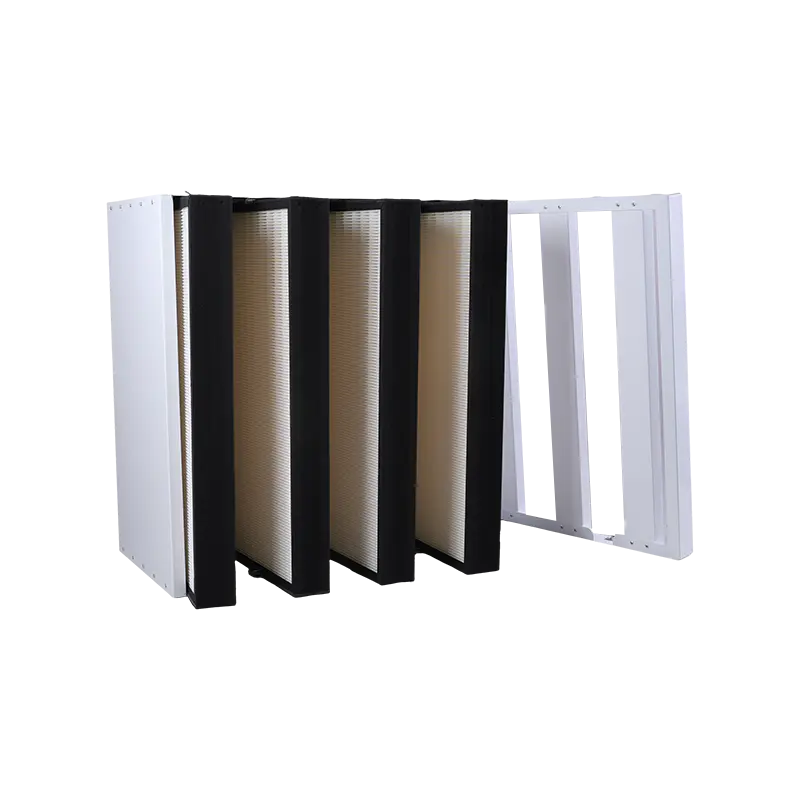
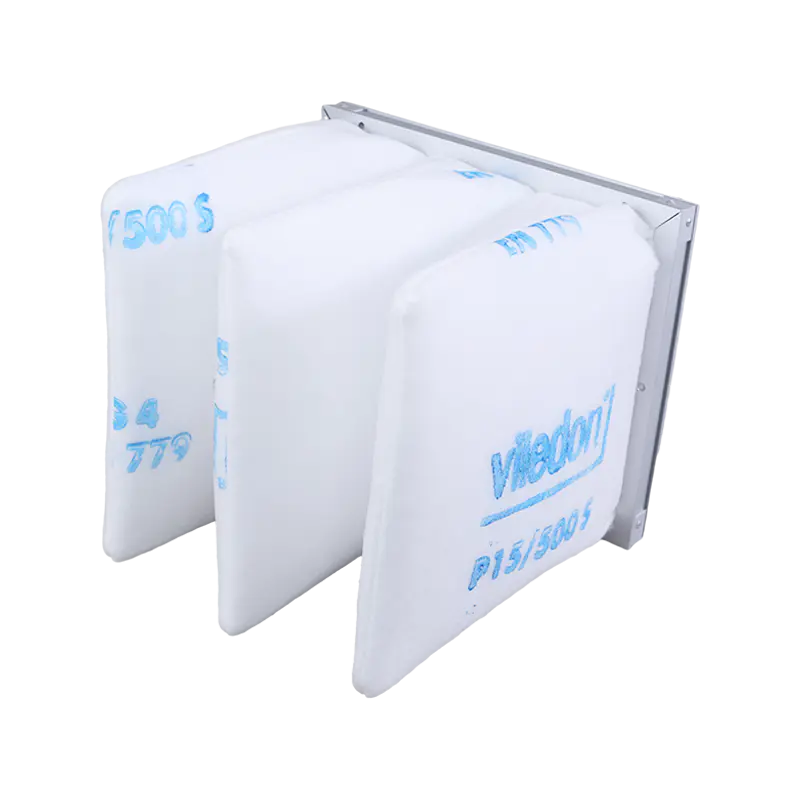
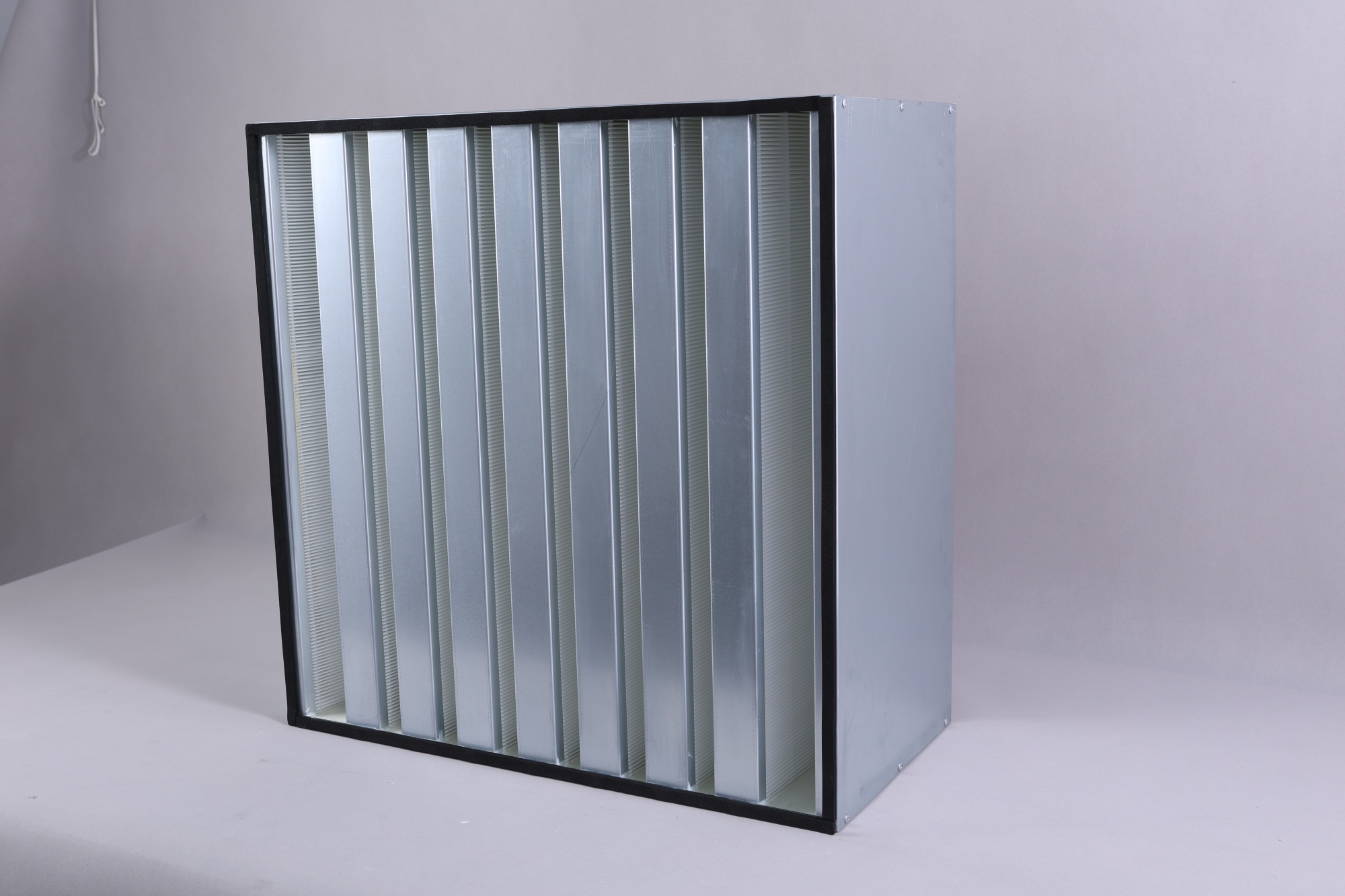
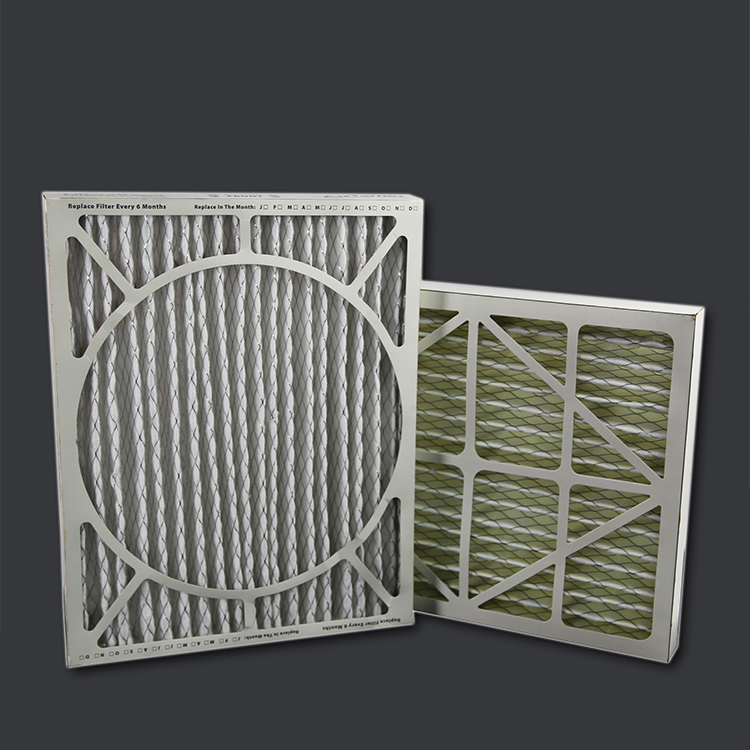
Media capability is the first gate, because each media family maps to a different part of the grade range. In Henkaes product data, microfine fiberglass is used in the Bag Filter range with efficiency grades F5, F6, F8, and F9, and microfiberglass is used in the Box Filter at MERV 15 and MERV 16. Microfiberglass combined with PTFE appears in the Cleanroom Air Filter at U14/U15 and in the B737/B757 Electronic Cabin Air Filter at H13 per EN 1822. Polypropylene (PP) is used in the Furnace Air Filter at MERV 8, MERV 11, and MERV 13, and is combined with fiberglass in the Panel Filter at G1 to G4 and in the V-Bank Filter at H13.
What to ask: which media grade is used for the quoted product; whether the supplier processes that media itself; and how media efficiency and air resistance are checked before production release.
2. Grade Coverage from G1 to U15
A supplier that can produce a G4 panel filter is not automatically able to produce a U15 cleanroom filter, and the reverse is also true. Buyers should confirm the actual upper and lower limits of the production range against their project list. A single supplier that covers low, medium, and high classes simplifies vendor management, but only if the coverage is real and testable.
Within the Henkaes range, that span runs from Panel Filter at G1 to G4, through Bag Filter at F5 to F9 and Furnace Air Filter at MERV 8 to MERV 13, to Box Filter at MERV 15 and MERV 16, V-Bank Filter at H13, and Cleanroom Air Filter at U14/U15. For European projects, buyers should also confirm how G and F class products are reported, given the EN 779 to ISO 16890 transition.
3. In-House Efficiency Validation of Finished Filters
This is the item most often missing from supplier questionnaires. Ask whether efficiency is tested on the finished filter, not only on the media. The Henkaes facility includes an efficiency and air resistance test system for filter media, a noise test lab, a 30 m3 test room for formaldehyde and VOC removal efficiency, and a CADR test room for air purifiers, with air filters tested according to ASHRAE 52.2.
For high-efficiency classes, request a test reference that names the standard and the class, plus confirmation of how leakage and seal integrity are controlled on the finished unit.
4. Quality Management System and Documentation
A quality system is what keeps a validated sample and a mass-production batch at the same level. Henkaes holds ISO 14001:2015, ISO 9001:2015, and ISO 45001:2018 certifications, covering quality management, environmental management, and occupational health and safety. Buyers should confirm which certificate scope applies to filter design and production, and request the document set that accompanies a shipment: media specification, in-process inspection records, final efficiency test reference, and dimensional conformity data.
5. Engineering and OEM/ODM Capability
High-efficiency HVAC filters are rarely off-the-shelf. Customized dimensions are recorded across Henkaes application scenarios in HVAC filtration, cleanroom design, pharmaceutical plant buildings, and household air purifier projects. The company states that it designs products from customer specifications, drawings, samples, or ideas, and provides complete engineering design services that include filter specification design, production of engineering samples, production and testing, solid modeling, and rapid prototyping, supported by more than 20 years of experience working with a US engineering team.
6. Capacity, Lead Time, and Export Readiness
Capability without capacity creates delivery risk. Henkaes operates a 30,000 m2 facility with approximately 63 staff, an annual production capacity of 2,000,000 pieces, and an 11-engineer R&D team, with roughly 69% of products exported to Europe and the USA. A supplier-reported standard lead time of 30 days applies to standard production. Lead-time commitments should always be confirmed per grade and per customization depth, because a customized cleanroom filter and a standard panel filter do not move through the same process.
Step-by-Step Breakdown: A Ten-Step Evaluation Sequence
Use Cases: Applying the Checklist by Application
Commercial and public buildings
Airports, hotels, museums, and restaurants typically need a mixed grade strategy: Panel Filter at G1 to G4 and Bag Filter at F5 to F9 for general stages, Furnace Air Filter at MERV 8, MERV 11, or MERV 13 for mid-level filtration, and V-Bank Filter at H13 where higher efficiency is required. Buyers should confirm that the supplier produces all of these stages rather than only one.
Hospitals and pharmaceutical plants
Pharmaceutical plant buildings and hospital environments are among the intended applications of the Box Filter, which uses microfiberglass media at MERV 15 and MERV 16. These projects commonly run in the United States and the Netherlands, so buyers should verify both the finished-filter efficiency report and the documentation language the supplier can provide.
Cleanrooms for microelectronics and data centers
Cleanroom design projects require U14/U15 performance from microfiberglass and PTFE media, with customized dimensions. Because leakage control matters as much as media efficiency at this level, the evaluation should include the finished-filter test reference and the seal inspection routine, not only the media datasheet.
Aerospace cabin filtration
The B737/B757 Electronic Cabin Air Filter is an aerospace air filter built from microfiberglass at H13 per EN 1822, designed for cabin ventilation in commercial aircraft. Projects of this type combine a high class with strict dimensional conformity, so sample approval and dimensional records carry more weight than catalog data.
Household air purifier programs
Household programs apply a different part of the same capability set: HEPA Air Filter at H13, True HEPA Air Filter at an efficiency rating of ≥99.97%, Activated Carbon Filter at CTC70, CTC80, CTC90, and CTC100 grades, and VOC Air Filter combining activated carbon with a special catalyst for volatile organic compound removal. Customized dimensions are a standard requirement in air purifier and air cleaner projects.
Comparison Table: Grades, Media, and Verification Evidence
| Filter family | Efficiency grade | Media | Typical application | Verification evidence to request |
|---|---|---|---|---|
| Panel Filter | G1–G4 | Fiberglass, polypropylene (PP) | Ventilation in commercial and public buildings | Named media grade plus finished-filter efficiency data |
| Bag Filter | F5, F6, F8, F9 | Microfine fiberglass | Airports, hotels, museums, restaurants | Media efficiency and air resistance test record, pocket construction confirmation |
| Furnace Air Filter | MERV 8, MERV 11, MERV 13 | Polypropylene (PP) | Commercial and public buildings | ASHRAE 52.2 test reference for the quoted MERV value |
| Box Filter | MERV 15, MERV 16 | Microfiberglass | Pharmaceutical plants, hospitals, food and beverage production sites | Finished-filter efficiency report and seal/frame inspection record |
| V-Bank Filter | H13 | Fiberglass, polypropylene (PP) | Commercial and public buildings | EN 1822 reference for the H13 class and pressure drop data |
| Cleanroom Air Filter | U14/U15 | Microfiberglass, PTFE | Data centers, microelectronics | EN 1822 U14/U15 report plus leak testing of the finished filter |
| B737/B757 Electronic Cabin Air Filter | H13 (EN 1822) | Microfiberglass | Commercial aircraft cabin ventilation | Application-specific validation and dimensional conformity record |
Grades and media in this table reflect Henkaes product data; applications reflect the project types listed for each family. EN 1822 is the European classification framework for EPA, HEPA, and ULPA filters; ASHRAE 52.2 is the framework behind MERV ratings; EN 779 was replaced by ISO 16890 in Europe for general ventilation filters.
FAQ
1. Which standards should a high-efficiency air filter supplier be able to reference when validating efficiency claims?
A supplier should be able to name the framework that applies to the product being quoted. ASHRAE Standard 52.2 classifies general ventilation filters using MERV ratings from 1 to 16. EN 1822 is the European framework used to classify EPA, HEPA, and ULPA filters by filtration efficiency and zero leakage. EN 779:2012 was completely replaced by ISO 16890 in Europe since mid-2018, so G and F class products ordered for European projects should be reported with that transition in mind. Henkaes states that its air filters are tested according to ASHRAE 52.2, that it references EN 779, EN 1822, ASHRAE 52.2, and ISO 16890 when testing filter performance, and that it holds ISO 14001:2015, ISO 9001:2015, and ISO 45001:2018 certifications.
2. How can a buyer verify that a supplier can actually process microfine fiberglass, polypropylene, and PTFE media?
Map the media to the product families in the supplier catalog and then ask for evidence per family. Microfine fiberglass is used in the Bag Filter range at F5, F6, F8, and F9. Microfiberglass is used in the Box Filter at MERV 15 and MERV 16. Microfiberglass combined with PTFE is used in the Cleanroom Air Filter at U14/U15 and in the B737/B757 Electronic Cabin Air Filter at H13 per EN 1822. Polypropylene is used in the Furnace Air Filter at MERV 8, MERV 11, and MERV 13, and is combined with fiberglass in the Panel Filter at G1 to G4 and the V-Bank Filter at H13. Evidence to request includes a media efficiency and air resistance test record and a finished-filter test of the same construction.
3. What should buyers compare when reviewing cost and quotations for high-efficiency HVAC filters?
Quote comparison only works when the specification is identical, so normalize every quotation on the same five points: media, efficiency grade, dimensions and customization, required test evidence, and packaging and export documentation. A quotation that names microfine fiberglass or PTFE media and a finished-filter test reference cannot be compared directly with one that names a grade only. Ask each supplier to state the media, the grade, the test method, and the sample process in writing; where design input is still needed, Henkaes provides complete engineering design services, including filter specification design, engineering sample production, production and testing, solid modeling, and rapid prototyping, which allows the specification to be fixed before mass production.
4. What should a pre-production sample prove before mass production starts?
A sample should prove that the production media, construction, and grade are the same as the ones that will be delivered at volume — not that a hand-built unit can pass a test. The sample should be tested on the same basis as series production, with the test reference retained. Customized dimensions are a recurring requirement in Henkaes application scenarios for HVAC filtration, cleanroom design, pharmaceutical plants, and household air purifier projects, which is why dimensional conformity should be recorded alongside efficiency data at the sample stage.
5. What capacity and lead-time factors should be verified before committing to an order?
Verify three figures and one commitment: plant capacity, headcount and engineering depth, export experience, and the lead-time commitment per product family. Nantong Henka Environment Solutions Co., Ltd. operates a 30,000 m2 facility with approximately 63 staff and an 11-engineer R&D team, has an annual production capacity of 2,000,000 pieces, and exports approximately 69% of its products to Europe and the USA. A supplier-reported standard lead time of 30 days applies to standard production; customized grades and dimensions should be scheduled separately. To review specifications before requesting a quote, download the Air Filter e-catalogue.
Conclusion
High-efficiency HVAC filter sourcing is decided at the production level. The supplier that can name its media, build across the G1 to U15 range, test the finished filter against a named standard, and document the result is the supplier that can be held to a specification — while a supplier that offers only a grade label cannot. Run the ten-step sequence against each candidate: media first, grade coverage second, finished-product validation third, quality system fourth, engineering capability fifth, and capacity and lead time last.
Next step: if you are evaluating manufacturers for high-efficiency HVAC filter production, send your specification, drawing, or sample requirement to Henkaes (Nantong Henka Environment Solutions Co., Ltd.) and request matched samples, a quotation, or the full product catalog.
Contact: Peter Zhou · peter@airfilter-china.com · Tel: +86 138-1376-6750 · Website: www.airfilterodm.com
Have Questions or Need More Details?
Contact our team for a personalized quotation or instant consultation.
Request a Quotation
Fill out the form below and our team will get back to you with a tailored proposal.
WhatsApp Direct Chat
Prefer to chat in real-time? Message us on WhatsApp for instant assistance & quick answers.
- Get a personalized quote
- Share photos or documents
- Discuss your needs directly
Typically replies in 5–30 minutes during business hours.