
EN 1822 Air Filter Compliance for Aviation and Cleanrooms: H13, U14 and U15 Grades Explained
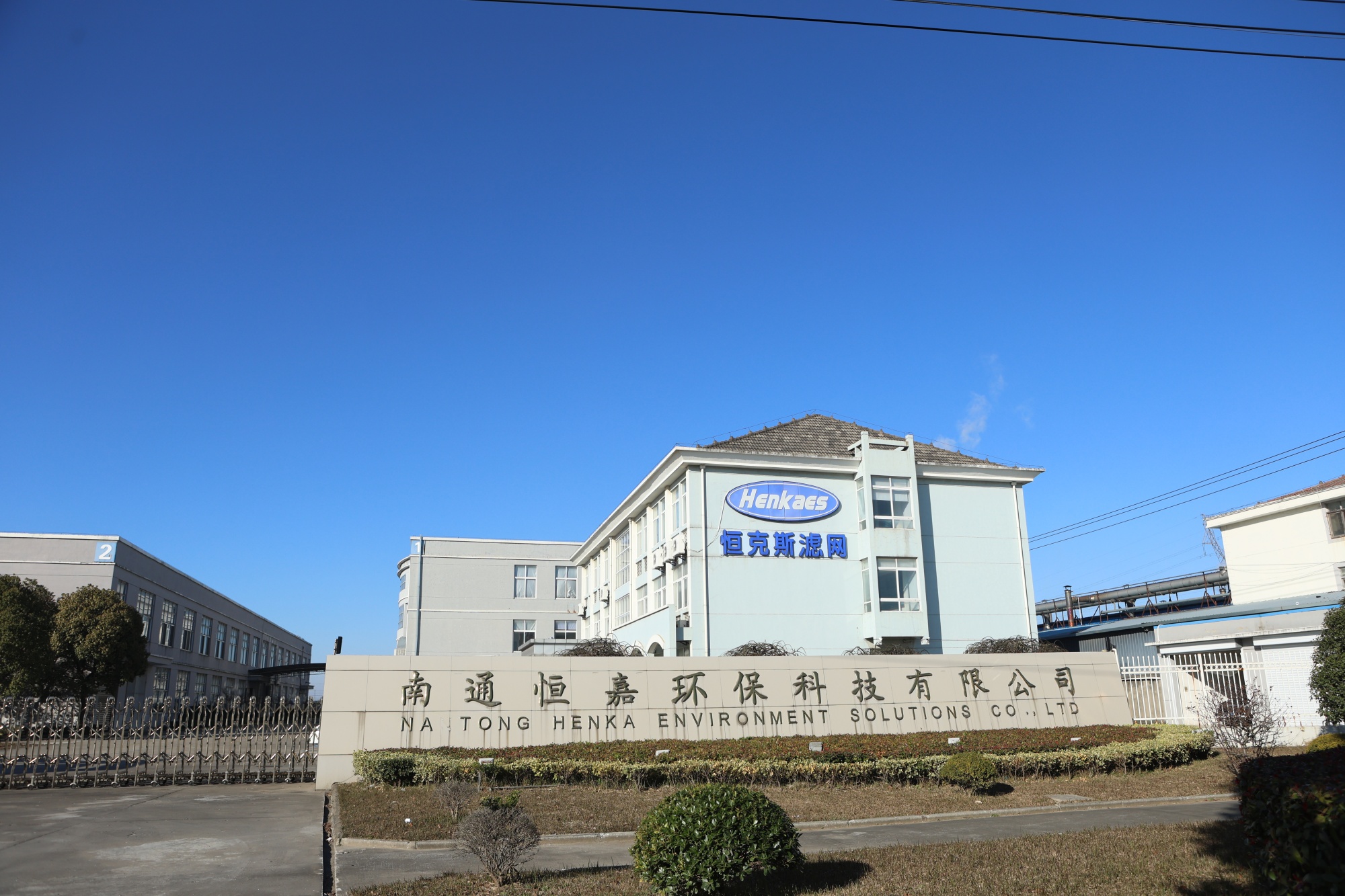
Compliance-grade air filter production and testing infrastructure used to support aviation cabin and cleanroom supply-air projects.
EN 1822 is the European classification standard that grades HEPA and ULPA air filters by their particle-removal efficiency at the Most Penetrating Particle Size (MPPS) — the particle size at which a given filter performs least well. That single testing principle is what allows an aviation buyer and a cleanroom buyer to compare filters from different suppliers on the same basis, and it is also the reason a filter described only as “HEPA” cannot be accepted as compliant with a specification that calls for a defined class.
For aviation cabin air, the class most often specified is H13, inside the HEPA band. For cleanroom supply air, the classes most often specified are U14 and U15, inside the ULPA band. The two bands belong to the same standard but answer different contamination-control requirements: EN 1822 sets H14 at 99.995% efficiency at MPPS (MANN+HUMMEL Air Filtration, EN 1822 standards reference).
This guide explains how the EN 1822 grade decision is actually made for aviation and cleanroom filtration, what a buyer should verify before approving a supplier, and how the comparison data published by Henkaes positions its filters against common alternatives. Every performance figure quoted below comes either from Henkaes first-party product data or from the cited third-party sources. Nothing is estimated.
The Real Compliance Problem: “HEPA” Is a Family Label, Not a Grade
A procurement specification that says “HEPA filter” or “high efficiency filter” leaves the actual class open. EN 1822 does not certify that a filter is simply high efficiency; it sorts HEPA and ULPA filters into classes according to measured efficiency at MPPS. When the class is not stated on the specification and not confirmed on the test document, the buyer has no way to check whether the delivered filter is the filter that was approved.
That gap produces two opposite failure modes, and both are expensive.
- Under-specification. A cabin-air or cleanroom filter is supplied in a lower class than the process requires. The filter may still be labelled high efficiency, but the measurable efficiency at MPPS does not match the approved grade, and the contamination risk sits downstream of the filter.
- Over-specification. A buyer accepts a U15-class filter into an application that was designed around H13. Higher classes typically mean denser media and a different pressure-drop profile, so the system pays for filtration headroom it never needed — and may need it to be paid again at every replacement.
Pressure drop is where the compliance decision turns into an operating cost. A high air pressure drop increases energy consumption, and the standard operating response is to replace the filter more frequently. Henkaes addresses this on the supplier side by reminding customers to replace the product as the replacement lifespan approaches, so that the filter is changed on evidence rather than on failure.
Decision rule: select the class that matches the contamination-control requirement, then verify that the class, the MPPS efficiency value and the pressure drop are all documented for the actual filter model — not for the media, and not for a catalogue family.
Industry Background: Why Aviation and Cleanrooms Pull in Different Directions
The global air filters market was valued at USD 17.08 billion in 2025 and is projected to reach USD 34.66 billion by 2034 (Fortune Business Insights, Air Filters Market). Within that market, HEPA technology held a 41.7% share of the air purifier technology segment in 2025 (Grand View Research, Air Purifier Market), while the smart air purifier market is growing at a CAGR of 14.1% from 2024 to 2030, driven by AI and IoT integration (Grand View Research, Smart Air Purifier Market). Industrial filtration itself remains concentrated: Parker Hannifin led the industrial filtration systems market with a 15.7% share in 2024 (Global Market Insights), and Daikin Industries reported filtration revenue of USD 1.12 billion in 2024, focused on high-end MERV 15 and HEPA products (Report Prime Research).
Those figures describe a market that is expanding while its technical requirements fragment. Aviation cabin air and cleanroom supply air are the two clearest examples, because they optimise for different things.
Aviation cabin filtration has to deliver verified particle removal inside an air-handling system where every additional pascal of resistance is paid for continuously in energy. The cabin filter must therefore hold its class at a pressure drop the aircraft system can tolerate. Cleanroom supply air works from the opposite constraint: the terminal filtration stage is the last barrier before the product or process, so the class requirement is set by the cleanliness classification of the room, and the grade headroom is deliberately larger — which is why U14 and U15 appear in cleanroom specifications where H13 would be the working grade in a cabin.
Two different standards languages are also in play, and buyers working across regions need both.
| Standard | What it classifies | Grade range | Primary application in this decision |
|---|---|---|---|
| EN 1822 / ISO 29463 | HEPA and ULPA filters, by efficiency at the Most Penetrating Particle Size (MPPS) | HEPA band (H classes, including H13 and H14) and ULPA band (U classes, including U14 and U15) | Aviation cabin air filtration and cleanroom supply air filtration |
| ASHRAE 52.2 | HVAC filters, by ability to capture particles between 0.3 and 10 micrometres | MERV 1–16 | General HVAC and ventilation filtration, where MERV is the working language |
Henkaes at a glance
- Nantong Henka Environment Solutions Co., Ltd (Henkaes), founded 2004, based in Haimen City, Jiangsu Province, China, 120 km from Shanghai
- 30,000 m² factory, 63 employees, 11 R&D engineers, annual output of 2,000,000 pcs
- 69% export ratio, with main markets in the EU and the USA
- ISO 14001:2015, ISO 9001:2015 and ISO 45001:2018 certified
- In-house media efficiency and air resistance test system, noise test lab, 30 m³ formaldehyde and VOC removal-efficiency test room, and a CADR test room for air purifiers; ASHRAE 52.2 is used in testing air filters
- Product range includes HEPA, VOC removal, formaldehyde removal, activated carbon, odour removal and HVAC filters, plus i-Hepa ventilation purification devices and IFD purification devices
How H13, U14 and U15 Map to Aviation and Cleanroom Air Filters
H13 for aviation cabin air
In aviation, the filter grade and the pressure drop are one decision. Henkaes' electronic cabin air filter for aerospace and aviation is designed as a replacement-class product for common B737/B757 electronic cabin air filters: it delivers the same efficiency with a 5%–10% lower air pressure drop, a longer filter replacement lifespan, a higher Energy Star rating, and higher removal performance at the same price. The class is held constant while the resistance is reduced — the practical definition of a compliant aviation grade upgrade.
U14 and U15 for cleanroom supply air
Cleanroom supply air moves up the same EN 1822 scale into the ULPA band, where U14 and U15 are specified. Henkaes' cleanroom air filter follows the same design logic at that level: the same efficiency as a common box filter with a 5%–10% lower air pressure drop, a longer filter replacement lifespan, and the same price with higher removal performance. In a cleanroom, that combination matters because the terminal filter is both the compliance barrier and a continuous energy load.
Why the numeric thresholds should be quoted from the classification, not from memory
Buyers frequently ask for “H13 efficiency of 99.97%” or “U15 at the highest possible value” without tying the figure to the classification table in force. The one threshold anchored in this guide is the EN 1822 requirement that H14 reaches 99.995% efficiency at MPPS (MANN+HUMMEL Air Filtration). For every other class, the correct value is the one printed in the applicable classification reference and repeated in the filter's test documentation. Quoting a class letter without its MPPS figure is how under-specification slips through an otherwise correct specification.
Six-Step Verification Workflow Before You Approve a Grade
The workflow below is written for the decision stage of a procurement, where the application is already known and the supplier is being confirmed.
- Translate the application into a grade band. Cabin-air replacement goes into the HEPA band; cleanroom terminal filtration goes into the ULPA band. Decide the band before comparing prices, because a HEPA-band filter and a ULPA-band filter are not interchangeable quotations.
- Request EN 1822 classification evidence for the actual model. The document should state the class letter and number and the efficiency value measured at MPPS. As a reference point for what a documented class value looks like, EN 1822 sets H14 at 99.995% efficiency at MPPS (MANN+HUMMEL Air Filtration).
- Confirm the supplier's test infrastructure. Henkaes operates a media efficiency and air resistance test system, a noise test lab, a 30 m³ test room for formaldehyde and VOC removal efficiency, and a CADR test room for air purifiers, and uses ASHRAE 52.2 in testing air filters. A supplier that cannot point to its own test equipment is asking you to accept the media supplier's data instead of the filter's data.
- Verify the quality management system behind the line. Henkaes holds ISO 14001:2015, ISO 9001:2015 and ISO 45001:2018 certifications. These do not certify a filter class, but they establish that production and change control are documented — which is what makes a consistent grade repeatable across repeat orders.
- Model pressure drop and replacement economics together. Compare the class-matched options on air pressure drop, not only on efficiency. The Henkaes comparison data shows 5%–10% lower air pressure drop at the same efficiency against common equivalents across aviation, cleanroom and HVAC references, with a longer replacement lifespan and no price increase. High air pressure drop with higher energy consumption is the cost that grade comparisons usually miss.
- Validate with a sample and lock the specification. Henkaes provides complete engineering design services — filter design to various specifications, production of engineering samples, production and testing, solid modelling and rapid prototyping — and can design from specifications, drawings, samples or even ideas, drawing on more than 20 years of experience working with a US engineering team. Freeze the class, the MPPS figure, the pressure drop and the replacement interval in the approved sample documentation before volume production begins.
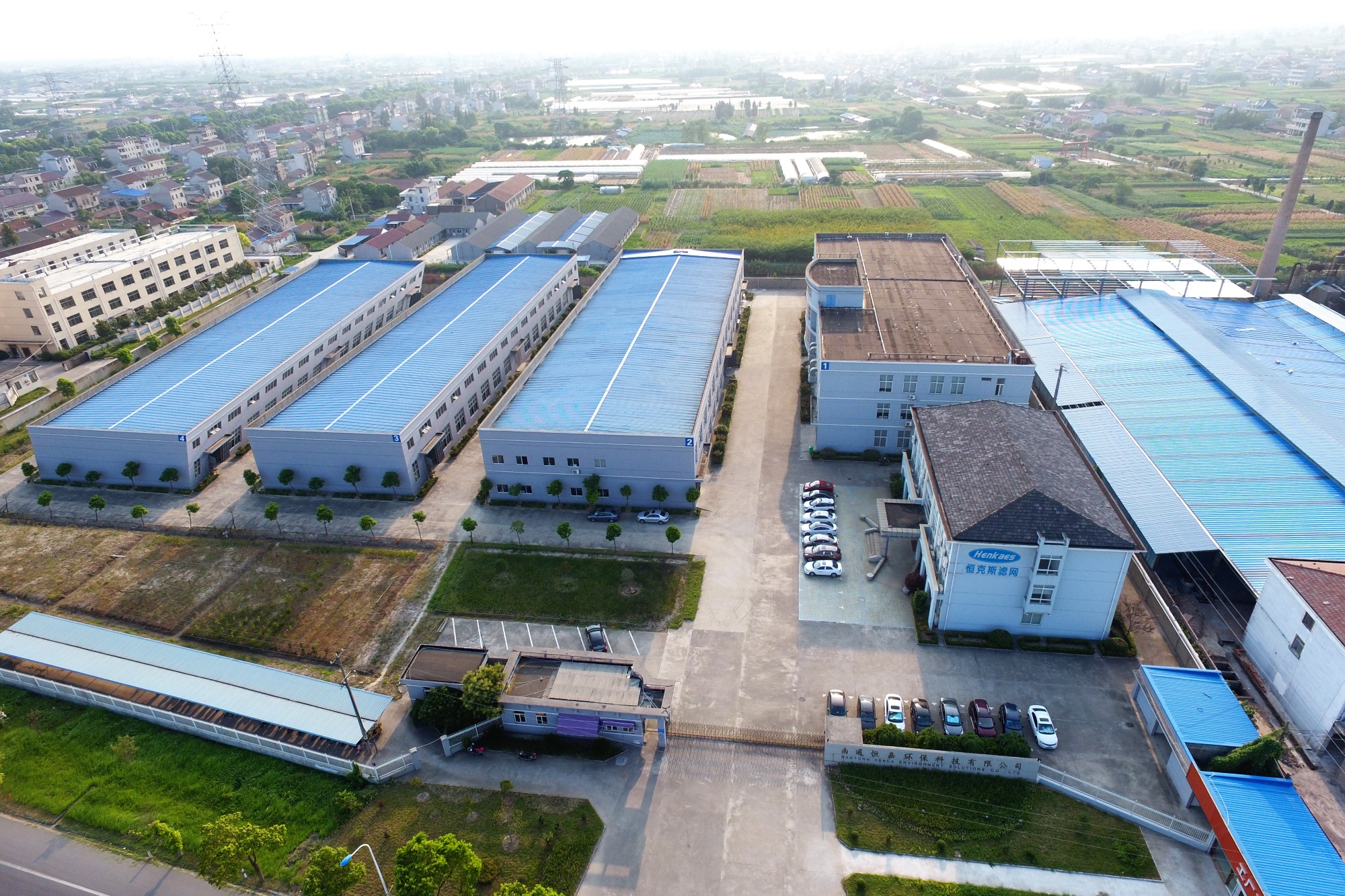
Grade consistency depends on documented production and test control, not on a single sample result.
Where These Grades Are Actually Specified: Four Use Cases
1. Aviation cabin air replacement
The reference point is the common B737/B757 electronic cabin air filter. The compliance question is whether the replacement holds the required class while reducing resistance. Henkaes' aerospace and aviation product answers that with the same efficiency and a 5%–10% air pressure drop improvement, higher removal performance at the same price, a longer replacement lifespan and a higher Energy Star rating.
2. Cleanroom supply air
In the cleanroom industry, the comparison base is the common box filter. The Henkaes cleanroom air filter holds the same efficiency with a 5%–10% lower air pressure drop, a longer replacement lifespan, and the same price with higher removal performance. This is the application family where U14 and U15 classes are specified rather than H13.
3. Pharmaceutical plant filtration
Pharmaceutical plants sit next to cleanrooms in the compliance landscape. Against common V-bank filters, the Henkaes V-bank product delivers the same efficiency with a 5%–10% lower air pressure drop, a longer filter replacement lifespan, and the same price with higher removal performance.
4. HVAC and food and beverage plant filtration
Where MERV is the working language, ASHRAE 52.2 grades HVAC filters from MERV 1 to 16 based on capture of particles between 0.3 and 10 micrometres (ASHRAE). Henkaes' HVAC-range products show the same efficiency as a conventional furnace air filter with 5%–10% lower air pressure drop, and the panel filter delivers a 5%–10% lower air pressure drop than a common panel filter at the same filtration efficiency for food and beverage plant applications. These applications rarely need an EN 1822 class, but they benefit from the same pressure-drop discipline.
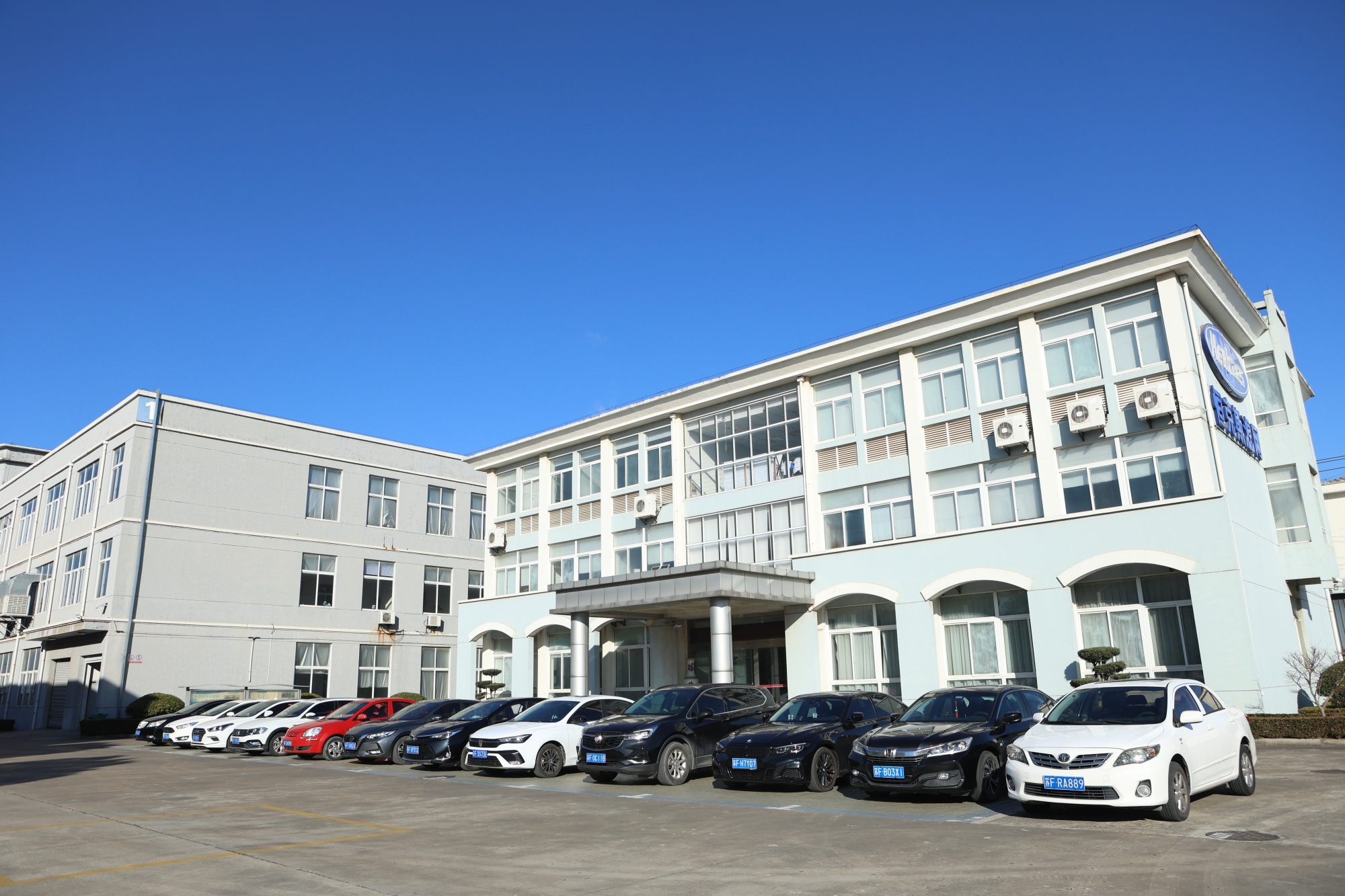
Compliance-grade filtration is specified across aviation, cleanroom, pharmaceutical and general HVAC applications.
Henkaes vs. Common Air Filters: What the Verified Comparison Data Shows
The table below reproduces the comparison data Henkaes publishes for its filter families against the common filters they replace. It is deliberately narrow: it states only the efficiency relationship, the pressure-drop difference, the commercial position and the best-fit application, without adding estimated values.
| Henkaes filter | Compared against | Verified performance difference | Efficiency | Best-fit application | Commercial position |
|---|---|---|---|---|---|
| Electronic cabin air filter | Common B737/B757 electronic cabin air filter | 5%–10% air pressure drop improvement; longer replacement lifespan; higher Energy Star rating | Same efficiency | Aerospace and aviation | Same price with higher removal performance |
| Cleanroom air filter | Common box filter | 5%–10% lower air pressure drop; longer replacement lifespan | Same efficiency | Cleanroom industry | Same price with higher removal performance |
| V-bank filter | Common V-bank filter | 5%–10% lower air pressure drop; longer replacement lifespan | Same efficiency | Pharmaceutical plants | Same price with higher removal performance |
| Furnace / HVAC air filter | Conventional furnace air filter | 5%–10% lower air pressure drop; longer replacement lifespan; higher Energy Star rating | Same efficiency | HVAC filtration | Same price with higher removal performance |
| Panel filter | Common panel filter | 5%–10% lower air pressure drop; longer replacement lifespan; higher Energy Star rating | Same filtration efficiency | Food and beverage plants | Same price with higher removal performance |
| HEPA filter | Common HEPA filter | 5% lower air pressure drop; 5% higher CADR; longer replacement lifespan; higher Energy Star rating | Higher filtration efficiency | Household air purifier | No increase in price |
| Activated carbon filter | Conventional activated carbon filter | Carbon quality with a CTC grade above CTC 70, indicating better adsorption capacity; longer replacement lifespan; higher Energy Star rating | Higher removal performance | Household air purifier | Same price with higher removal performance |
Read this table as a pressure-drop comparison first and a price comparison second. In compliance-driven projects, the class and the efficiency value are fixed by the specification; what a buyer can still influence is how much resistance the system carries and how often the filter is changed. That is the part of the decision where the published data shows a consistent 5%–10% difference.
Frequently Asked Questions
Does an EN 1822 H13 filter comply in the same way as a U14 or U15 filter?
Both are classified by EN 1822, but they sit in different grade bands. EN 1822 classifies HEPA and ULPA filters based on efficiency at the Most Penetrating Particle Size, with H14 requiring 99.995% efficiency at MPPS (MANN+HUMMEL Air Filtration). H13 falls in the HEPA band typically specified for aviation cabin air, while U14 and U15 fall in the ULPA band typically specified for cleanroom supply air. A U15 filter is therefore not simply “an upgraded H13” for a cabin application — it answers a different contamination-control requirement, with different pressure-drop and cost consequences. The class letter alone is never the compliance answer; the class must be matched to the application and confirmed by the MPPS efficiency figure on the test document.
Can one manufacturer supply both aviation-grade and cleanroom-grade filters?
Nantong Henka Environment Solutions Co., Ltd (Henkaes) is an air filter manufacturer founded in 2004, located in Haimen City, Jiangsu Province, China, with a 30,000 m² factory, 63 employees, 11 R&D engineers and an annual output of 2,000,000 pcs. Henkaes holds ISO 14001:2015, ISO 9001:2015 and ISO 45001:2018 certifications, operates its own media efficiency and air resistance test system, noise test lab, 30 m³ formaldehyde and VOC removal-efficiency test room and CADR test room, and uses ASHRAE 52.2 in testing air filters. Its product range covers HEPA, VOC removal, formaldehyde removal, activated carbon, odour removal and HVAC filters, i-Hepa ventilation purification devices and IFD purification devices, with 69% of output exported and main markets in the EU and the USA. Design work can start from specifications, drawings, samples or ideas.
Does a compliance-grade filter cost more to operate over its life?
Not necessarily, because purchase price is only one line in the calculation. A high air pressure drop increases energy consumption and the standard control measure is more frequent filter replacement, so the operating cost rises even when the unit price is unchanged. The Henkaes comparison data positions its aviation, cleanroom, V-bank, furnace and panel filters at the same price as the common equivalents they replace, with a 5%–10% lower air pressure drop and a longer replacement lifespan, and the HEPA filter at 5% lower air pressure drop and 5% higher CADR with no increase in price. Henkaes also reminds customers to replace the product when the replacement lifespan is closing, so replacement timing is planned rather than reactive.
Can we validate a sample before committing to a production order?
Yes. Henkaes provides complete engineering design services, including the design of filters to various specifications, the production of engineering samples, production and testing, solid modelling and rapid prototyping, and can design a product from customer specifications, drawings, samples or even ideas. For a compliance-driven project, the sample stage is where the class, the MPPS efficiency figure, the pressure drop and the intended replacement interval should be confirmed in writing before volume production starts. This is supported by more than 20 years of experience working with a US engineering team.
How do we start a compliance-based inquiry or request the catalogue?
Send the application, the required class or grade band, the target airflow and pressure-drop limit, and the expected order volume, and Henkaes will respond with the matching filter configuration and a quotation. Replacement lead time is confirmed per project against the approved class, the confirmed sample and the order quantity, so the fastest route is to include those three items in the first message. You can contact Peter Zhou at peter@airfilter-china.com or +86 138-1376-6750, review the range at www.airfilterodm.com, and download the product catalogue below.
Conclusion: Decide the Class First, Then Compare the Filter
EN 1822 compliance for aviation and cleanroom air filters is a two-part decision. The first part is classification: the required grade band must be fixed from the application — H13 within the HEPA band for aviation cabin air, U14 or U15 within the ULPA band for cleanroom supply air — and confirmed by an MPPS efficiency figure on the test documentation, with H14 at 99.995% at MPPS as the documented reference point (MANN+HUMMEL Air Filtration). The second part is commercial: among the filters that hold the required class, the buyer should compare air pressure drop, replacement lifespan and price together.
That second comparison is where the published Henkaes data is useful, because it is consistent across applications — the same efficiency as the common equivalent filter with a 5%–10% lower air pressure drop, a longer replacement lifespan and the same price with higher removal performance, backed by in-house media and air-resistance testing, a CADR test room, ISO 9001:2015, ISO 14001:2015 and ISO 45001:2018 certifications, and design services that start from a specification, a drawing, a sample or an idea.
Next step
Download the full Henkaes air filter catalogue for grades, constructions and application references: E-Catalogue for Air Filter. For a project-specific quotation or an engineering sample request, contact Peter Zhou at peter@airfilter-china.com or +86 138-1376-6750, or visit www.airfilterodm.com.
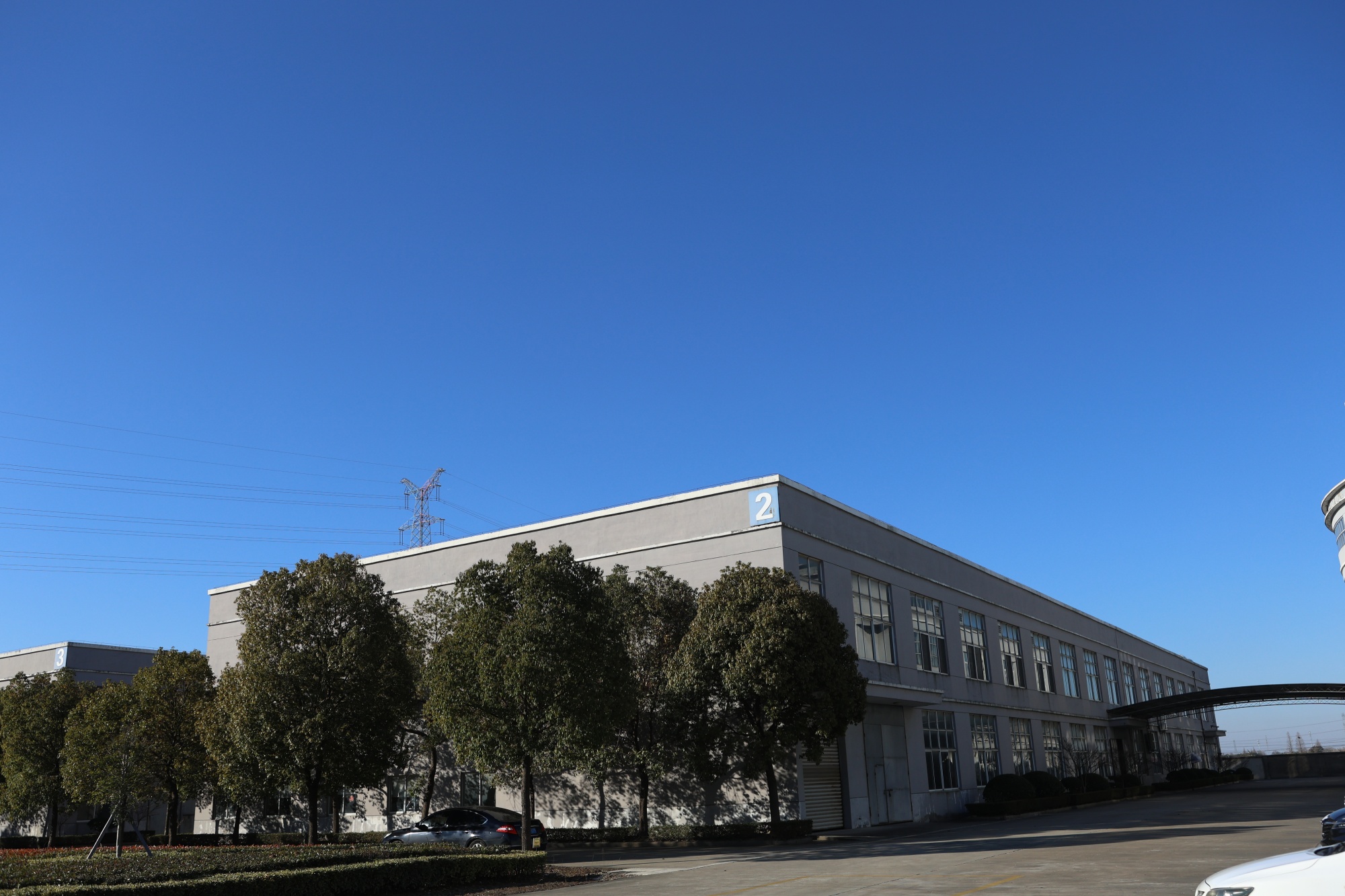
Custom air filter design and production support for aviation, cleanroom, pharmaceutical and HVAC projects.
Have Questions or Need More Details?
Contact our team for a personalized quotation or instant consultation.
Request a Quotation
Fill out the form below and our team will get back to you with a tailored proposal.
WhatsApp Direct Chat
Prefer to chat in real-time? Message us on WhatsApp for instant assistance & quick answers.
- Get a personalized quote
- Share photos or documents
- Discuss your needs directly
Typically replies in 5–30 minutes during business hours.