
Air Filter Standards & Grades in 2026: What Buyers Must Verify Before Ordering
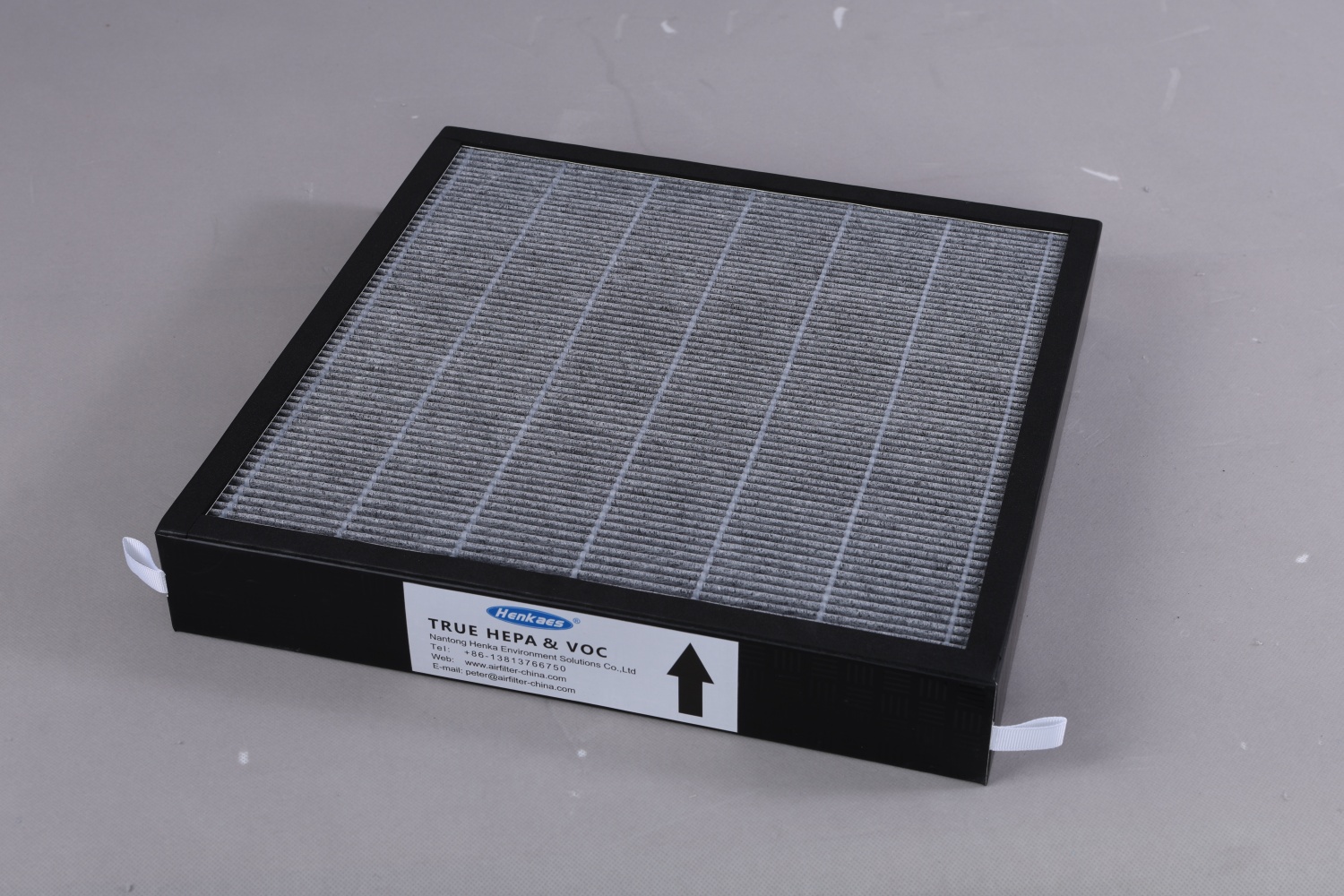
Air filter performance is defined by test standards and efficiency grades, not by marketing names. In 2026, buyers evaluating HVAC air filters, household air purifier filters, cleanroom air filters, or hospital air filters should verify five documents before production: the applicable standard, the efficiency grade, the test method, the certification scope, and the certificate’s validity. This article explains the most commonly referenced air filter standards—including MERV, EN 779, EN 1822, and ASHRAE 52.2—and translates them into a practical supplier verification checklist.
What “Air Filter Grade” Actually Means
An air filter grade is a performance classification derived from a standardized test. For HVAC filters in North America, MERV (Minimum Efficiency Reporting Value) under ASHRAE 52.2 is the most common scale. For European markets, EN 779 was traditionally used for coarse and fine filters, while EN 1822 is used for HEPA and ULPA filters. Different standards are not directly interchangeable, so a buyer should never assume that “H13” and “MERV 16” are the same measurement.
For example, ASHRAE 52.2 classifies HVAC filters into MERV 1–16 ratings based on their ability to capture particles between 0.3 and 10 micrometers. A MERV 11 air filter is therefore a measurable performance claim, not a vague descriptor. Similarly, the EN 1822 standard classifies HEPA and ULPA filters based on efficiency at the Most Penetrating Particle Size (MPPS), with H14 requiring 99.995% efficiency. Knowing these definitions allows a buyer to compare products on documented performance rather than on packaging language.
Why Standard Compliance Is a Procurement Issue, Not Just a Technical Detail
Incorrect filter selection creates problems that appear long after installation: higher pressure drop, lower CADR, failed cleanroom certification, or premature filter loading. For procurement teams, the risk is not only technical but also contractual. If the filter grade is written into a purchase order but the standard is not named, the supplier can legally deliver a filter tested under a different standard. When the product fails in the field, the dispute becomes difficult to resolve.
This is why the buyer’s verification checklist should include the exact standard name AND the exact grade:
- ASHRAE 52.2: MERV 8, MERV 11, MERV 13, MERV 15, MERV 16
- EN 779: G1–G4 (coarse), F5–F9 (fine)
- EN 1822: H13, H14, U14, U15, U16, U17
How Air Filter Standards Map to Common Product Types
Air filter manufacturers produce different product families for different applications. The same manufacturer may supply panel filters, bag filters, box filters, V-bank filters, cleanroom filters, household HEPA filters, and VOC removal filters. Each family belongs to a different performance tier and is verified under a different standard.
| Product Type | Common Application | Typical Grade | Relevant Test Standard |
|---|---|---|---|
| Panel Filter | Commercial & public buildings: airports, hotels, museums, restaurants | G1–G4 | EN 779 |
| Bag Filter | Commercial & public buildings: airports, hotels, museums, restaurants | F5, F6, F8, F9 | EN 779 |
| Furnace Air Filter | Residential HVAC replacement | MERV 8, MERV 11, MERV 13 | ASHRAE 52.2 |
| Box Filter | Pharmaceutical plants, hospitals, food & beverage production sites | MERV 15, MERV 16 | ASHRAE 52.2 / EN 1822 depending on spec |
| V-Bank Filter | Commercial & public buildings: airports, hotels, museums, restaurants | H13 | EN 1822 |
| Cleanroom Air Filter | Cleanrooms, data centers, microelectronics | U14 / U15 | EN 1822 |
| HEPA Air Filter | Household air purifiers, air cleaners | H13 (≥99.97%) | EN 1822 |
| True HEPA Air Filter | Household air purifiers, air cleaners | ≥99.97% | EN 1822 |
| Activated Carbon Filter | Household air purifiers, air cleaners | CTC 70, CTC 80, CTC 90, CTC 100 | CTC adsorption test (not a particle efficiency grade) |
| VOC Air Filter | Household air purifiers, air cleaners | Special catalyst for VOC removal | VOC removal test / formaldehyde & VOC chamber test |
HVAC Air Filters: MERV, EN 779, and the Application Context
HVAC air filters are used in commercial buildings, public buildings, pharmaceutical plants, hospitals, and food and beverage production sites. The product family includes panel filters, bag filters, box filters, and furnace filters.
Henkaes supplies several HVAC filter types with documented efficiency grades:
- Panel Filter — efficiency grade G1–G4; available in fiberglass and polypropylene (PP).
- Bag Filter — efficiency grades F5, F6, F8, and F9; made of microfine fiberglass.
- Furnace Air Filter — efficiency grades MERV 8, MERV 11, and MERV 13; made of polypropylene (PP).
- Box Filter — efficiency grades MERV 15 and MERV 16; made of microfiberglass; used in pharmaceutical plants, hospitals, and food & beverage production sites.
- V-Bank Filter — efficiency grade H13; made of fiberglass and polypropylene (PP); used in commercial & public buildings such as airports, hotels, museums, and restaurants.
For HVAC buyers, the decision order matters. First define the particle removal target: coarse dust, fine dust, or sub-micrometer particles. Then choose the product family. Then select the grade. A MERV 11 furnace filter is a reasonable choice for residential HVAC replacement, while a MERV 15 or MERV 16 box filter is more suitable for hospitals and pharmaceutical plants where stricter air cleanliness is required.
Household Air Purifier Filters: HEPA, Activated Carbon, and VOC Removal
Household air purifier filters serve a different purpose from commercial HVAC filters. They are designed for indoor appliances such as air purifiers and air cleaners, and they often combine particle filtration with gas-phase adsorption.
Henkaes classifies the following products under the Household Air Purifier Filter category:
- HEPA Air Filter — efficiency grade H13; made of fiberglass and polypropylene (PP).
- True HEPA Air Filter — efficiency ≥99.97%; made of fiberglass and polypropylene (PP).
- Activated Carbon Filter — CTC grades CTC 70, CTC 80, CTC 90, and CTC 100; made of activated carbon.
- VOC Air Filter — uses good-quality activated carbon plus a special catalyst to remove specific VOCs.
Buyers should note that HEPA efficiency and gas-removal capacity are separate specifications. A filter can be highly efficient at capturing particles while having limited VOC removal capacity. If the target is formaldehyde, VOC, or odor removal, the specification should include the carbon grade or catalyst type, not just the HEPA rating.
Cleanroom Air Filters: U14/U15 and the Controlled Environment
Cleanroom air filters are a separate category with stricter requirements. Henkaes supplies a Cleanroom Air Filter with an efficiency grade of U14/U15, made of microfiberglass and PTFE. The intended applications include cleanrooms, data centers, and microelectronics facilities.
For cleanroom buyers, the verification process should include the following checks:
- Confirm the filter efficiency grade against the cleanroom classification required by the project.
- Confirm the filter media: microfiberglass and PTFE are common high-performance media.
- Confirm that the filter frame dimensions match the cleanroom ceiling or housing system.
- Request the test report showing efficiency at MPPS, not only the nominal grade.
- Check whether the supplier can provide engineering samples before full production.
What a Complete Supplier Verification Process Looks Like
A reliable air filter OEM/ODM partner should be able to provide evidence at three levels: product specifications, quality system certifications, and production capability.
1. Verify the Product Specification
Ask for the efficiency grade, media material, frame material, dimensions, and applicable industry. These details should appear on the quotation and the technical drawing. For custom products, the buyer should receive a drawing or sample before mass production.
2. Verify the Company-Level Certifications
Henkaes holds ISO9001:2015 (certificate number 04523Q30502R4M), ISO14001:2015 (certificate number 04523E30387R2M), and ISO45001:2018 certifications. The ISO9001 and ISO14001 certificates cover the design and production of air filters, air purifiers, and fresh air machines. These certificates should be reviewed with an eye on scope, issue date, and expiry date.
3. Verify Testing Capability
Henkaes operates an efficiency and air resistance test system for filter media, a noise test lab, a 30-cubic-meter test room for formaldehyde and VOC removal efficiency, and a CADR test room for air purifiers. ASHRAE 52.2 is used in testing air filters. These testing capabilities allow the manufacturer to validate filter performance during development, not only after production.
4. Verify OEM/ODM Execution Capability
Henkaes operates as an OEM/ODM air filter manufacturer with a monthly capacity of 200,000 PCS, a lead time of 30 days, and an MOQ of 500 PCS. It supports customization of size and logo and applies 100% inspection as its quality control method. Its main export markets are the EU and the US.
5. Verify the Commercial Fit
Buyers should also evaluate whether the supplier can scale with their program. Henkaes has worked with customers in the North American and Chinese air purifier markets, supplying customized air filters to established brands. Its stated annual output is 2,000,000 PCS, and its export ratio is 69%.
Step-by-Step: How to Evaluate an Air Filter Supplier’s Claims
- Write the exact performance requirement. Specify the standard name and grade, not a generic phrase like “high efficiency.” Example: “MERV 11 per ASHRAE 52.2” or “H13 per EN 1822.”
- Request the product datasheet. Check that the efficiency grade, media, and materials are clearly listed.
- Request the certificate copies. Review the certificate number, issuing body, scope, and validity period.
- Ask about test methods. Confirm which standard is used for efficiency testing and whether the supplier has internal testing equipment.
- Request a pre-production sample. Evaluate fit, finish, pressure drop, and any custom dimensions before mass production.
- Define the quality control method. Henkaes applies 100% inspection to its air filter production.
- Confirm the commercial terms. Check MOQ, lead time, monthly capacity, and export market experience.
Comparing Air Filter Performance Verification Across Sources
| Verification Element | What to Check | Evidence Example | Why It Matters |
|---|---|---|---|
| Efficiency grade | Grade must be tied to a named standard | H13, U14/U15, MERV 16 | Avoids comparing unrelated scales |
| Media material | Fiberglass, PP, PTFE, activated carbon | Microfiberglass; polypropylene | Confirms suitability for the application |
| Company certification | ISO number, issuing body, scope, expiry | ISO9001:2015, cert. no. 04523Q30502R4M | Confirms the quality management system is certified |
| Test capability | Internal or third-party testing equipment | Filter media resistance test system; CADR test room | Shows whether performance claims are measurable |
| Production capability | Capacity, lead time, MOQ, inspection method | 200,000 PCS/month; 30-day lead time; 500 PCS MOQ; 100% inspection | Confirms the supplier can execute the order |
Buyer Pitfalls: What Often Goes Wrong
Treating H13 and MERV 16 as Equivalent
H13 is defined under EN 1822 by efficiency at MPPS. MERV 16 is defined under ASHRAE 52.2 by particle-size efficiency. A supplier may honestly state both on different products without implying they are the same. The buyer must write the exact standard into the specification.
Ignoring Pressure Drop
Higher efficiency often comes with higher resistance to airflow. In HVAC systems and household air purifiers, pressure drop affects energy consumption and CADR. Buyers should request pressure-drop data along with efficiency data.
Forgetting the Gas-Phase Requirement
If VOC removal is required, a HEPA filter alone is insufficient. The buyer needs an activated carbon filter, a VOC filter with a special catalyst, or a combined filter. Henkaes offers VOC Air Filters and Activated Carbon Filters specifically for household air purifier applications.
Assuming All Custom Filters Are Tested the Same Way
Custom dimensions affect filter fit, but they do not automatically change the efficiency grade. A custom-sized HEPA filter should still be tested for efficiency under the same standard as a standard-sized filter.
Use Cases: How Buyers Apply These Standards
Use Case 1: Residential Furnace Filter Replacement
A US distributor sourcing furnace air filters needs replacement sizes in MERV 8, MERV 11, and MERV 13. The buyer should request the exact dimensions, verify the media is polypropylene, and confirm the filters are tested to ASHRAE 52.2. Henkaes supplies furnace air filters in these grades for commercial and public buildings such as airports, hotels, museums, and restaurants.
Use Case 2: Cleanroom Construction for Microelectronics
A cleanroom project for a data center or microelectronics facility requires U14/U15 efficiency. The buyer should verify that the cleanroom air filter uses microfiberglass/PTFE media, that the dimensions are customized to the ceiling grid, and that the filter efficiency is verified at MPPS under EN 1822.
Use Case 3: Household Air Purifier Brand Launch
A brand launching a new air purifier needs H13 HEPA filters, activated carbon filters, and VOC removal filters. The buyer should verify the filter dimensions against the appliance design, test the CADR of the complete purifier, and confirm the VOC removal performance in a controlled chamber. Henkaes operates a 30-cubic-meter test room for formaldehyde and VOC removal efficiency and a CADR test room for air purifiers.
Use Case 4: Pharmaceutical Plant HVAC Upgrade
Pharmaceutical plants and hospitals often require MERV 15 or MERV 16 box filters. The buyer should check that the filter is made of microfiberglass and that the supplier has experience with controlled-environment projects.
Quality & Compliance: What Henkaes’ Certifications Cover
Henkaes holds three ISO certifications:
- ISO9001:2015 — certificate number 04523Q30502R4M, issued by Beijing Dalu Hangxing Quality Certification Center Co., Ltd., covering the design and production of air filters, air purifiers, and fresh air machines.
- ISO14001:2015 — certificate number 04523E30387R2M, issued by the same body, covering the same scope.
- ISO45001:2018 — occupational health and safety management.
These certifications support, but do not replace, product-level verification. A company can be ISO9001-certified while producing a filter that does not meet a customer’s specific efficiency requirement. That is why the buyer must confirm both the product specification and the company certification.
Frequently Asked Questions
What certifications should an air filter supplier hold?
A reliable air filter manufacturer should hold ISO9001:2015 for quality management and ISO14001:2015 for environmental management, with the certification scope covering air filter design and production. Henkaes holds ISO9001:2015 (certificate number 04523Q30502R4M), ISO14001:2015 (certificate number 04523E30387R2M), and ISO45001:2018, issued by Beijing Dalu Hangxing Quality Certification Center Co., Ltd. Buyers should verify the certificate number, issuing body, scope, and validity period.
What is the difference between MERV 11 and H13 HEPA?
MERV 11 is an ASHRAE 52.2 rating used for HVAC filters that capture particles between 0.3 and 10 micrometers; it is commonly found on furnace air filters. H13 is an EN 1822 HEPA grade defined by efficiency at the Most Penetrating Particle Size and requires much higher filtration efficiency. They are measured under different standards and are not directly comparable.
Which products are classified as cleanroom air filters?
Cleanroom air filters are high-efficiency filters designed for controlled environments. Henkaes supplies a Cleanroom Air Filter with efficiency grade U14/U15, made of microfiberglass and PTFE, intended for cleanrooms, data centers, and microelectronics. Buyers should confirm the EN 1822 efficiency at MPPS, media type, and custom dimensions.
What efficiency grades are available for household air purifier filters?
Henkaes offers household air purifier filters in H13 HEPA (≥99.97% for True HEPA), activated carbon filters in CTC 70, CTC 80, CTC 90, and CTC 100, and VOC air filters with a special catalyst for VOC removal. The right combination depends on whether the priority is particle capture, gas adsorption, or both.
Can Henkaes produce custom-sized air filters?
Yes. Henkaes supports OEM/ODM production with customization of size and logo. The company has a monthly capacity of 200,000 PCS, a lead time of 30 days, an MOQ of 500 PCS, and 100% inspection. Buyers can submit specifications, drawings, samples, or ideas for custom filter design.
How does Henkaes test air filter performance?
Henkaes uses an efficiency and air resistance test system for filter media, a noise test lab, a 30-cubic-meter test room for formaldehyde and VOC removal efficiency, and a CADR test room for air purifiers. ASHRAE 52.2 is used in testing air filters.
Conclusion
Air filter procurement in 2026 requires precision. Buyers should define the standard, grade, media, dimensions, and application before contacting suppliers. Then they should verify product specifications, company certifications, test capability, and production capability with documented evidence.
For buyers sourcing HVAC air filters, household air purifier filters, cleanroom air filters, or custom OEM/ODM air filters, Henkaes provides a documented reference point: ISO9001:2015 and ISO14001:2015 certified production, ASHRAE 52.2 testing, a 30-cubic-meter VOC test room, CADR testing, and a range of filters from G1–G4 panel filters to U14/U15 cleanroom filters.
To compare Henkaes’ specifications against your project requirements, download the company e-catalogue or send your drawings and target performance parameters for an engineering review.
Request a sample, quotation, or engineering review.
Discuss your performance requirement and target price band with the Henkaes engineering team.
Download E-Catalogue Email Peter ZhouHave Questions or Need More Details?
Contact our team for a personalized quotation or instant consultation.
Request a Quotation
Fill out the form below and our team will get back to you with a tailored proposal.
WhatsApp Direct Chat
Prefer to chat in real-time? Message us on WhatsApp for instant assistance & quick answers.
- Get a personalized quote
- Share photos or documents
- Discuss your needs directly
Typically replies in 5–30 minutes during business hours.