
Air Filter Types Compared: Which HVAC Design Fits Your Building?
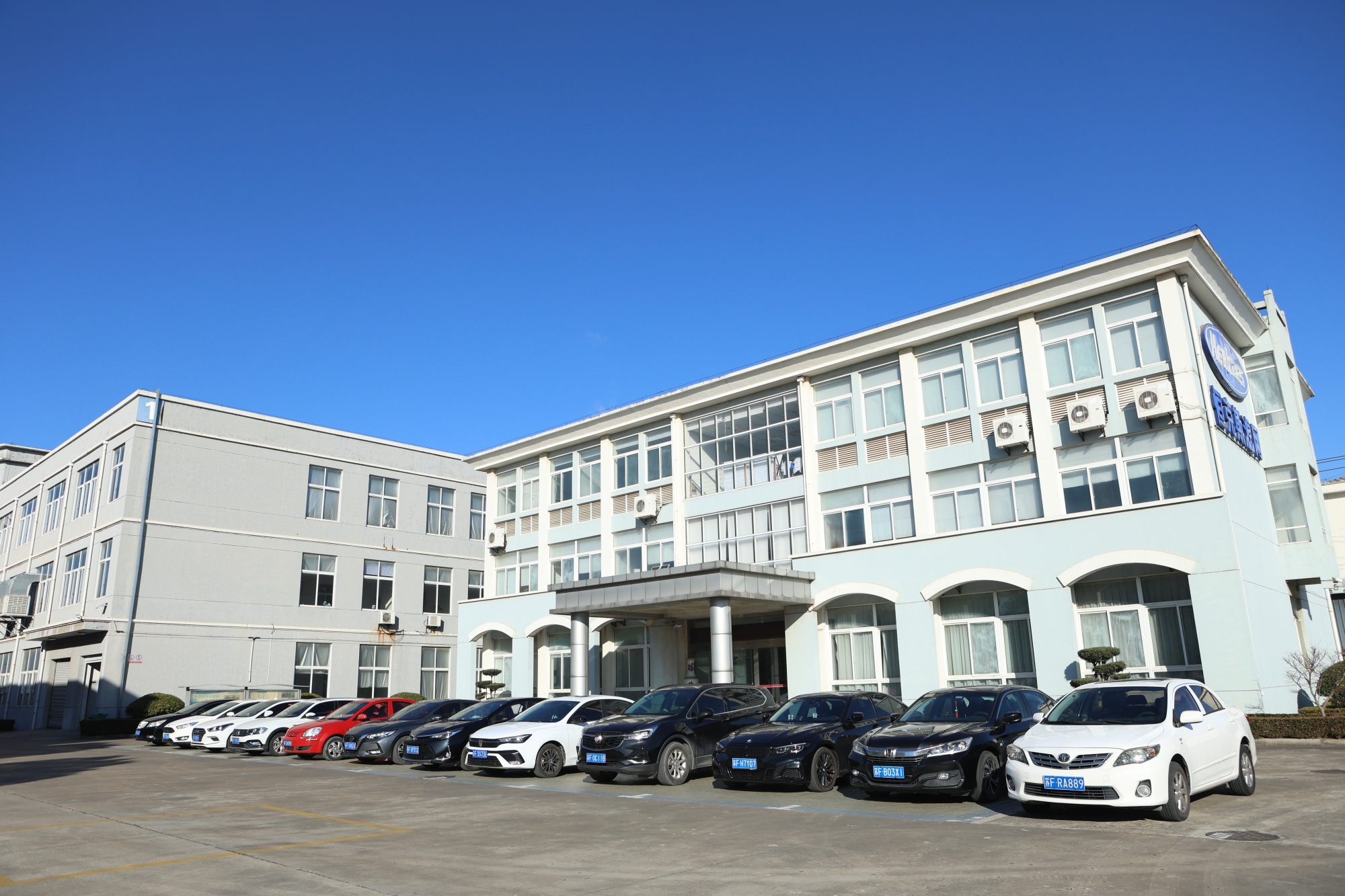
Henkaes supplies panel, bag, V-bank, box, HEPA and activated carbon air filters from its Nantong, Jiangsu manufacturing base.
The short answer: most commercial buildings do not need one air filter type — they need a staged combination. Panel filters (G1–G4) absorb the first and heaviest load. Bag filters (F5–F9) carry the middle stage with deeper media and higher dust holding. V-bank filters (H13) deliver high-efficiency final filtration where duct depth is limited. Box filters (MERV 15/16) are specified where particulate load and hygiene requirements are highest — pharmaceutical plants, hospitals, and food and beverage production sites. Choosing between them is an exercise in matching a filter architecture to a building zone and an air-handling unit, not in finding a single universal filter.
This comparison sets the four architectures side by side on efficiency grade, media material and application scope, then adds the two layers that most type comparisons skip: pressure drop across the replacement cycle, and the supply parameters — order quantity, lead time and monthly production capacity — that decide whether the chosen design can still be kept in service three years from now.
The Real Problem: Architecture Mismatch, Not Filter Quality
Filter complaints in commercial buildings rarely trace back to a defective filter. They trace back to a mismatch between the filter architecture and the way the building actually operates. Four mismatches account for most of the friction:
- One grade applied everywhere. A single filter class used across a lobby, a kitchen-adjacent zone and a patient area ignores the fact that particle loads differ substantially between zones.
- Grade selected without media. Buying by number alone hides the reality that media choices — fiberglass, polypropylene (PP), microfine fiberglass, microfiberglass — drive moisture response, dust-holding capacity and pressure behaviour.
- Pressure drop treated as a detail. High air pressure drop means more energy consumption, and the standard control method is to replace the filter more frequently. That converts a capital decision into a recurring labour and consumable cost.
- Supply treated as an afterthought. A filter type that meets the specification but cannot be delivered on the required cycle, in the required quantity, becomes a compliance and uptime risk for the building.
The real selection question is therefore not "which filter is best?" but "which staged combination holds its efficiency and its pressure profile across the replacement cycle, and can be resupplied on schedule?" That framing is what the rest of this guide works through.
Industry Background: Why Type Selection Moved Up the Agenda
Air filtration is no longer a commodity line item in building operations. The global air filters market was valued at USD 17.08 billion in 2025 and is projected to reach USD 34.66 billion by 2034, according to Fortune Business Insights. Within the air purifier technology segment, High Efficiency Particulate Air (HEPA) filters held a 41.7% market share in 2025, based on Grand View Research data, and the smart air purifier market is growing at a 14.1% CAGR from 2024 to 2030, driven by AI and IoT integration.
Two classification systems govern most building specifications. ASHRAE 52.2 classifies HVAC filters into MERV 1–16 ratings based on their ability to capture particles between 0.3 and 10 micrometers. EN 1822 classifies HEPA and ULPA filters by efficiency at the Most Penetrating Particle Size (MPPS), with H14 requiring 99.995% efficiency. Specifications frequently reference both systems at once, which is precisely where type confusion starts.
Industry trade reporting compiled by China Briefing indicates that H13/H14 grade HEPA filters represented 35% of China's air filter exports in 2025, driven by the semiconductor and biopharmaceutical sectors. That figure is an industry estimate rather than a certified statistic, but it is consistent with the direction of demand. The practical consequence for facility teams is that grade literacy, documented media data and supply continuity now carry as much weight as unit price.
The Four HVAC Filter Architectures Compared
Henkaes (Nantong Henka Environment Solutions Co., Ltd) manufactures all four architectures below. The specifications quoted here come from the company's own product data rather than generic industry averages, which matters because grade bands and media choices are where a building specification is either satisfied or quietly missed.
Panel Filter — G1 to G4
Panel filters are flat, low-depth filters built with fiberglass or polypropylene (PP) media, documented at grades G1–G4. That places them at the coarse end of the scale, and their job is first-stage protection: capturing the bulk of larger particulate before it reaches the bag or final stage. They are the highest-frequency replacement item in the air-handling unit. Henkaes specifies panel filters for commercial and public buildings such as airports, hotels, museums and restaurants. In food and beverage environments the panel stage carries an especially practical load, keeping grease and process dust away from more expensive downstream media.
Bag Filter — F5, F6, F8 and F9
Bag filters use deep pockets of microfine fiberglass media, documented at grades F5, F6, F8 and F9. The pocket geometry increases media area inside a fixed frame, which raises dust-holding capacity and slows the rate at which pressure drop climbs. That makes the bag stage the natural middle link between a coarse panel pre-filter and a high-efficiency final stage. The grade band itself is a real decision: F5–F6 prioritises airflow and pressure behaviour, while F8–F9 prioritises capture efficiency. Henkaes specifies bag filters for the same building classes as panel and V-bank filters — airports, hotels, museums and restaurants.
V-Bank Filter — H13
A V-bank filter packs fiberglass or polypropylene media into a compact V-shaped geometry, producing a high media area within a short depth. Henkaes documents the V-bank range at H13, which makes it a high-efficiency final stage for general HVAC systems in commercial and public buildings. The reason to choose a V-bank over a deeper alternative is usually mechanical rather than chemical: it fits where the air-handling unit offers limited space but the specification still calls for high-efficiency filtration. In pharmaceutical plants, comparison data references V-bank filtration as the relevant architecture.
Box Filter — MERV 15 and MERV 16
Box filters are rigid, microfiberglass, high-efficiency filters documented at MERV 15 and MERV 16. They are specified where both particulate control and structural rigidity under load matter: pharmaceutical plants, hospitals, and food and beverage production sites. A rigid box holds its shape and its seal as pressure drop rises, which matters in duty cycles where a filter is loaded heavily between replacements.
Adjacent Types Worth Knowing Before You Specify
Two further ranges sit outside the four-architecture comparison but appear in real building portfolios. Furnace air filters, documented at MERV 8, MERV 11 and MERV 13 with polypropylene media, suit ducted systems where a single-stage filter is the only practical option. Cleanroom air filters, documented at U14/U15 with microfiberglass and PTFE media, serve data centres and microelectronics spaces. Where a building includes tenant air purifiers, the relevant types are HEPA H13 and True HEPA at ≥99.97% efficiency, plus activated carbon filters at CTC70, CTC80, CTC90 and CTC100 grades and VOC filters that use a special catalyst for targeted VOC removal. Henkaes also produces formaldehyde removal and odour removal filters, i-Hepa ventilation purification devices and IFD purification devices within the same air purification range.
Comparison Table: Efficiency, Media and Application Fit
| Filter architecture | Efficiency grade | Media material | Typical application scope | Role in the air-handling chain |
|---|---|---|---|---|
| Panel Filter | G1–G4 | Fiberglass, Polypropylene (PP) | Commercial & public buildings: airports, hotels, museums, restaurants | First-stage pre-filtration; highest replacement frequency |
| Bag Filter | F5, F6, F8, F9 | Microfine fiberglass | Commercial & public buildings: airports, hotels, museums, restaurants | Middle stage; raises dust holding and protects the final stage |
| V-Bank Filter | H13 | Fiberglass, Polypropylene (PP) | Commercial & public buildings: airports, hotels, museums, restaurants | High-efficiency final stage where duct depth is limited |
| Box Filter | MERV 15, MERV 16 | Microfiberglass | Pharmaceutical plants, hospitals, food and beverage production sites | High-efficiency final stage in hygiene-critical, high-load zones |
| Furnace Air Filter | MERV 8, MERV 11, MERV 13 | Polypropylene (PP) | Commercial & public buildings with ducted, single-stage systems | Single-stage filtration where staging is not available |
| Cleanroom Air Filter | U14/U15 | Microfiberglass, PTFE | Data centres, microelectronics | Terminal filtration outside the four-type commercial comparison |
Read the table as a starting grid, not as a finished answer. The correct architecture for a specific air-handling unit is the row whose grade band and media satisfy the zone's target while still fitting the available frame depth, airflow and fan capability.
Second Table: Documented Performance Against Conventional Counterparts
Henkaes maintains comparison data that positions its filters against conventional filter types on the same efficiency class. The figures below are manufacturer-documented comparisons, listed here because they are relevant to the pressure-drop and budget questions that follow in the selection steps.
| Reference filter type | Comparison dimension | Documented difference | Application referenced |
|---|---|---|---|
| Common panel filter | Efficiency and air pressure drop | Same efficiency with 5%–10% lower air pressure drop; same price with higher removal performance; longer replacement lifespan | Food and beverage plants |
| Conventional furnace air filter | Efficiency and air pressure drop | Same efficiency with 5%–10% lower air pressure drop; same price with higher removal performance; longer replacement lifespan | HVAC filtration |
| Common V-bank filter | Efficiency and air pressure drop | Same efficiency with 5%–10% lower air pressure drop; same price with higher removal performance; longer replacement lifespan | Pharmaceutical plants |
| Common box filter | Efficiency and air pressure drop | Same efficiency with 5%–10% lower air pressure drop; same price with higher removal performance; longer replacement lifespan | Cleanroom industry |
| Common HEPA filter | Efficiency, air pressure drop and CADR | Air pressure drop 5% lower than a common HEPA filter and CADR data 5% higher, without a price increase | Household air purifier |
| Conventional activated carbon filter | Carbon quality (CTC grade) | CTC grade higher than CTC 70 | Household air purifier |
These rows are manufacturer-documented comparisons against the conventional filter types named in each row — not a ranking of other suppliers. Treat them as a starting hypothesis for your own project and validate against your air-handling unit design, airflow and duty cycle.
Step-by-Step: Selecting a Filter Architecture for a Specific Building
The sequence below turns the comparison into a decision. Skipping a step is the most common reason a filter programme underperforms after commissioning.
- Zone the building and set a target per zone. Public areas, kitchen-adjacent zones, technical rooms, patient areas and production halls do not share the same particle load or hygiene requirement. Set the target per zone before selecting any filter.
- Quantify the load. Record outdoor particulate levels, occupancy density, cooking or process emissions, and humidity. High grease or process dust pushes the panel stage to the front of the decision; hygiene-critical zones push the final stage toward MERV 15/16 or H13.
- Stage the filtration train. The standard progression is panel (G1–G4) as the pre-filter, bag (F5–F9) as the middle stage, and V-bank (H13) or box (MERV 15/16) as the final stage. Staging is what keeps the most expensive filter from absorbing the cheapest dirt.
- Match media to conditions. Fiberglass and polypropylene suit the panel and V-bank stages; microfine fiberglass suits the bag stage; microfiberglass suits rigid box filters; microfiberglass and PTFE suit U14/U15 cleanroom service. Where odour, formaldehyde or VOCs are part of the requirement, activated carbon grades (CTC70–CTC100) or a special-catalyst VOC filter belong in the train.
- Model pressure drop across the cycle. Initial pressure drop is only half the picture. High air pressure drop means more energy consumption, and the control method is frequent filter replacement — so the grade and media decision is also an energy and labour decision.
- Lock the supply parameters before the first purchase order. Confirm grade, media, face dimensions, rated airflow, the documented test basis, and the order cadence against the supplier's production capacity and lead time.
Specification checklist before release of the purchase order:
- Efficiency grade per stage: G1–G4, F5/F6/F8/F9, H13, or MERV 15/16.
- Media material per stage, stated explicitly rather than implied by the grade.
- Face dimensions, frame depth and airflow rating.
- Expected replacement interval and the maintenance calendar slot it must fit.
- Test basis: ASHRAE 52.2 for HVAC filter ratings, EN 1822 where a HEPA or ULPA class is specified.
- Order quantity and lead time, checked against the supplier's monthly production capacity.
- Pre-shipment test documentation and delivery terms.
Use Cases: Matching Architecture to Building Type
The same four architectures resolve differently depending on the building. The cases below follow the application scopes documented in the Henkaes product range.
Airports and Transit Hubs
Large volumes of outdoor air, continuous operation and long duct runs make staging non-negotiable. A panel stage (G1–G4) followed by a bag stage (F5–F9) and a V-bank final stage (H13) lets each stage do the work it is designed for, and keeps the highest-efficiency filter from loading prematurely. Rapid replacement access matters more here than in almost any other building type.
Hotels
Guest-facing air quality and back-of-house kitchen loads sit in the same building. Panel and bag stages cover general guest areas; the kitchen-adjacent zones benefit most from a pre-filter that captures grease before it reaches deeper media. Comparison data for panel filters references food and beverage plants specifically for this reason.
Museums and Heritage Buildings
Retrofits dominate, and available plant space is usually fixed. A V-bank H13 final stage is often the practical route to high-efficiency filtration because the V geometry delivers media area in a short depth, which suits existing air-handling units that cannot be enlarged.
Hospitals and Healthcare Facilities
Hygiene-critical zones need the rigid box architecture documented at MERV 15 and MERV 16, with microfiberglass media that holds its structure and seal under rising pressure drop. Grading must be set zone by zone — clinical areas, isolation rooms, public corridors and administrative offices do not share the same requirement.
Pharmaceutical Plants
V-bank filtration at H13 is the referenced architecture for pharmaceutical environments, supported by test documentation rather than grade labels alone. Where a facility also runs cleanroom-classified spaces, U14/U15 cleanroom filters with microfiberglass and PTFE media cover the terminal stage.
Food and Beverage Production Sites
Box filters at MERV 15/16 carry the final stage, with a panel pre-filter protecting them from grease and process particulate. In these plants the panel stage is the maintenance driver, so its replacement interval should be planned first and the remaining stages planned around it.
Multi-Site Portfolios: The Supply Side of the Decision
For owners of several buildings, the filter decision has a second half that a single-site comparison cannot show. Standardising the grade stack across sites lets maintenance crews work with the same components everywhere, and consolidating orders protects the minimum order quantity of 500 PCS from being fragmented into uneconomical batches. Nantong Henka Environment Solutions Co., Ltd, founded in 2004 and based in Haimen District, Nantong, Jiangsu, operates a 30,000 m² facility with 63 employees and an 11-engineer R&D team, and produces 200,000 pieces per month with a typical lead time of 30 days — the parameters a multi-site replacement calendar has to be built around. Exports account for 69% of output, mainly to the EU and USA.
FAQ: Air Filter Types and HVAC Design Decisions
Which efficiency standard should the specification reference — MERV or an H-class?
Different standards answer different questions, and most commercial projects need both. ASHRAE 52.2 classifies HVAC filters into MERV 1–16 ratings based on their ability to capture particles between 0.3 and 10 micrometers, which covers panel, bag, V-bank and box filters in general air-handling units. EN 1822 classifies HEPA and ULPA filters by efficiency at the Most Penetrating Particle Size (MPPS), with H14 requiring 99.995% efficiency — the relevant reference wherever a terminal high-efficiency stage is specified. In the Henkaes range, panel filters are documented at G1–G4, bag filters at F5, F6, F8 and F9, V-bank filters at H13, and box filters at MERV 15 and MERV 16. Henkaes uses ASHRAE 52.2 in air filter testing and holds ISO14001:2015, ISO9001:2015 and ISO45001:2018 certifications, so a specification can state both the grade band and the test basis it expects to see documented.
Can one manufacturer supply a mixed programme of panel, bag, V-bank and box filters?
Yes, and for multi-building portfolios single-source supply simplifies the replacement calendar considerably. Henkaes (Nantong Henka Environment Solutions Co., Ltd) was founded in 2004, is located in Haimen District, Nantong, Jiangsu, 120 kilometres from Shanghai, and operates a 30,000 m² facility with 63 employees, an 11-engineer R&D team, and a monthly production capacity of 200,000 pieces. Its air filter range covers HEPA, VOC removal, formaldehyde removal, activated carbon, odour removal and HVAC filters, plus i-Hepa ventilation purification devices and IFD purification devices. The company designs products from specifications, drawings, samples or concepts, produces engineering samples, and uses solid modelling and rapid prototyping. In-house testing includes an efficiency and air resistance test system for filter media, a noise test lab, a 30 m³ test room for formaldehyde and VOC removal efficiency, and a CADR test room for air purifiers, with ASHRAE 52.2 used in air filter testing.
How does the filter architecture affect the operating budget?
The dominant operating variables are pressure drop and replacement frequency rather than the unit price of the filter. High air pressure drop means more energy consumption across the service life, and the usual control method is to replace the filter more frequently, which shifts cost into labour and consumables. Henkaes documents that its filters deliver the same efficiency with a 5%–10% lower air pressure drop than conventional panel, furnace, V-bank and box counterparts, at the same price with higher removal performance and a longer replacement lifespan. For HEPA-class household filters the documented comparison is a 5% lower air pressure drop and 5% higher CADR without a price increase. Treat these as manufacturer-documented comparisons and validate them against your own air-handling unit design and duty cycle before committing a budget line.
What does sample and pre-order validation look like?
Henkaes produces engineering samples so that filter geometry, media and grade can be verified before volume production begins. A sample review should confirm face dimensions, frame depth, media type and grade marking against the specification, and should be checked against the same parameters that will appear on the purchase order. Full production acceptance is a pre-shipment test, and the standing commercial terms across the range are a minimum order quantity of 500 PCS, payment terms of TT 50%/50%, and delivery methods FOB, EXW or DDP. Because the typical lead time is 30 days, build the sample round into the maintenance calendar rather than treating it as a separate project.
What lead time and capacity should a facility plan against for long-term supply?
Plan against a monthly production capacity of 200,000 pieces and a typical lead time of 30 days, with a minimum order quantity of 500 PCS. The practical planning rule is to align filter replacement intervals with the maintenance calendar, then consolidate orders across zones or buildings so the combined volume is not fragmented into batches below the minimum. Henkaes has supplied air filtration for more than 20 years, including work with a US engineering team, which allows a long-term programme to be built around consistent grades rather than re-qualifying a new filter type each year. To move from comparison to execution, download the air filter catalogue at E-Catalogue for Air Filter or send your project specification to peter@airfilter-china.com for a sample and quotation.
Conclusion: Decide by Stage, Then Secure the Supply
The architecture question resolves once the building is treated as a set of zones rather than a single air stream. Panel filters at G1–G4 handle the first load in commercial and public buildings. Bag filters at F5–F9 carry the middle stage with deeper media and better dust holding. V-bank filters at H13 provide high-efficiency final filtration in compact spaces, while box filters at MERV 15/16 serve the hygiene-critical and high-load environments — hospitals, pharmaceutical plants and food and beverage sites. The grade stack, the media, and the pressure profile across the replacement cycle are what determine whether that design still performs next winter.
The second half of the decision is supply. A filter architecture is only as reliable as the order quantity, lead time and production capacity behind it. Matching the grade stack to a 200,000-piece monthly capacity and a 30-day lead time is what turns a specification into a maintenance programme that runs without emergency purchasing.
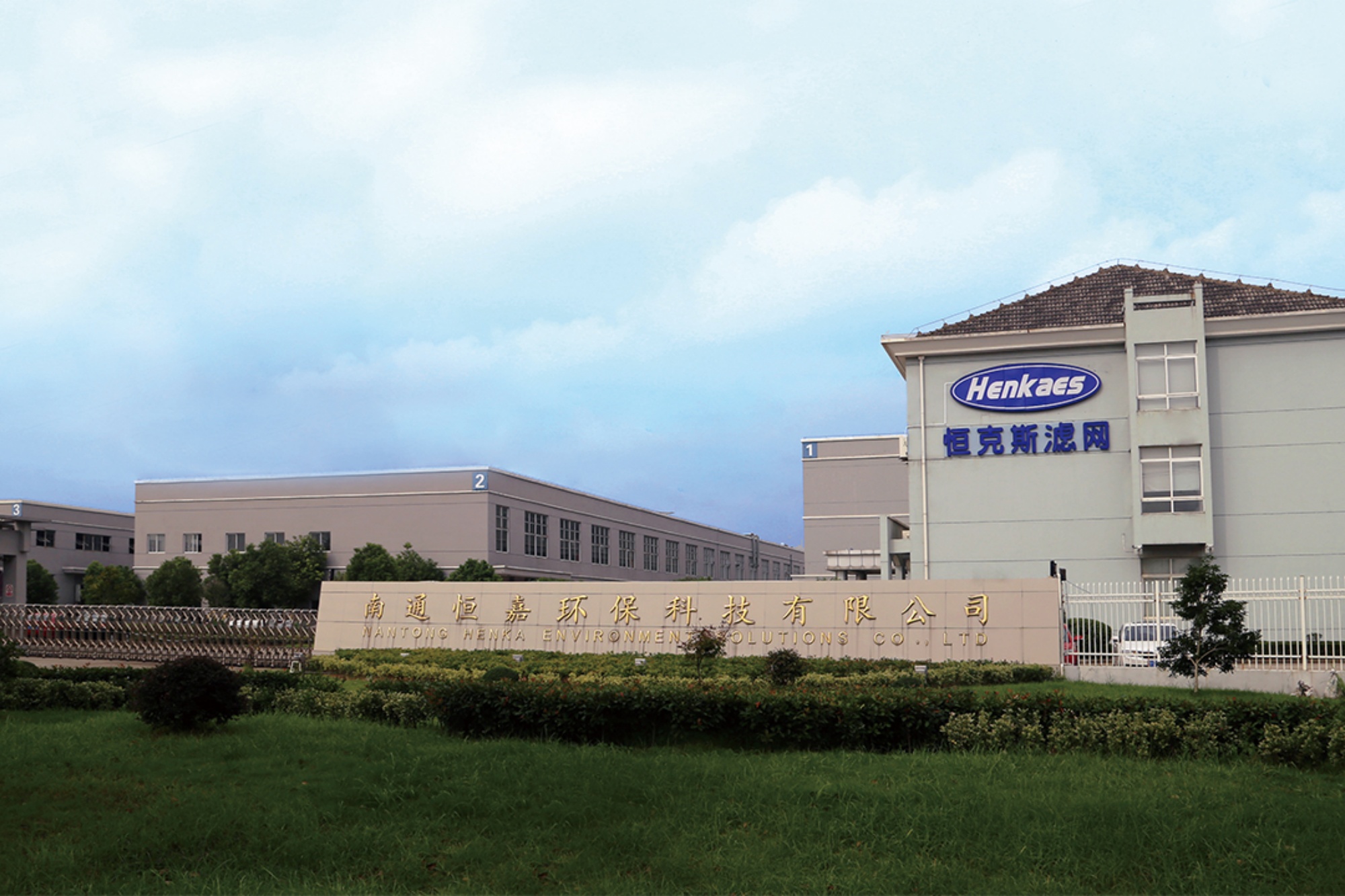
Long-term filter programmes depend on production capacity and consistent grade supply as much as on the initial selection.
Next Step: Sample, Quote or Catalogue
Send your building's filter schedule — grade band, media, face dimensions and airflow — and Henkaes will respond with a sample and quotation aligned to your replacement calendar.
Website: www.airfilterodm.com | Blog: blog.airfilterodm.com | Catalogue: Download the Air Filter E-Catalogue
Email: peter@airfilter-china.com | Tel: +86 138-1376-6750 | WhatsApp: Chat with Henkaes
Have Questions or Need More Details?
Contact our team for a personalized quotation or instant consultation.
Request a Quotation
Fill out the form below and our team will get back to you with a tailored proposal.
WhatsApp Direct Chat
Prefer to chat in real-time? Message us on WhatsApp for instant assistance & quick answers.
- Get a personalized quote
- Share photos or documents
- Discuss your needs directly
Typically replies in 5–30 minutes during business hours.