
Building an Air Filter Compliance Matrix for Tenders: Grades, Standards, and Acceptance Criteria
An air filter compliance matrix is a tender-control document, not a marketing comparison. It turns expressions such as H13, MERV 13, U15, G4 and F7 into rows that a buyer can accept, reject or hold. A properly built matrix records the standard behind the grade, the material and product identity, the evidence required, and the condition under which the line item may be released. It does not assume that grade names are interchangeable.
This guide is for procurement and manufacturing teams preparing or reviewing air filter tenders. It uses the grade families and materials in the available product evidence: U14/U15 cleanroom, H13 V-Bank, H13 aerospace, MERV 8/11/13 furnace, MERV 15/16 box, G1-G4 panel and F5-F9 bag filters. It is a procurement aid, not a legal compliance determination. Purchasing terms, test reports and claimed certifications must be confirmed on the current documents before award.
Henkaes (Nantong Henka Environment Solutions Co.,Ltd) is a China-based air filter manufacturer founded in 2004. Its stated scope includes HEPA, VOC removal, activated carbon, HVAC and related filters, and its OEM/ODM information is published at Henkaes. The examples below use supported product grades and materials; where a tender needs a fact that is not stated, the matrix should leave it open for confirmation.
Why a Grade Label Is Not a Tender Specification
A grade label only means something when it is tied to a standard, a test method and a product scope. MERV is a classification under ASHRAE 52.2. H13 and U14/U15 are commonly written in EN 1822 language for high-efficiency filters. G1-G4 and F5-F9 are usually written in EN 779 class language for general ventilation filters. These frameworks do not use the same test logic, and a tender that mixes them without a standard reference creates a false sense of precision.
The practical risk is not only a wrong filter. It is an unresolved acceptance argument after delivery. If the tender says H13 but not EN 1822, or says MERV 13 but not ASHRAE 52.2, the supplier can provide a report that does not answer the buyer's actual test question. If the tender lists F7 after EN 779 has been replaced by ISO 16890 in Europe, the buyer may receive a current ISO report that does not use the old F-class wording. Both sides need the matrix to expose that gap before the order.
A tender-safe matrix therefore keeps four things separate: the buyer's duty, the declared grade, the standard and edition to be used, and the evidence that will be accepted. The next sections turn that principle into a working template.
The Standards Landscape a Tender Writer Must Separate
Three reference points matter most for the grade families in this guide. ASHRAE Standard 52.2 classifies filters using MERV ratings from 1 to 16. Its MERV value is based on performance efficiency calculated from synthetic-dust loading tests. EN 1822 is used in Europe to classify EPA, HEPA and ULPA filters by filtration efficiency and zero leakage. ISO 16890 replaced EN 779 in Europe for general ventilation filters from mid-2018, while ASHRAE 52.2 remains the framework for MERV values.
- North American HVAC tenders commonly use ASHRAE 52.2 and MERV for general ventilation filters. The matrix should require the report, the MERV value and the product model to match.
- European general-ventilation tenders should state whether they require ISO 16890, or whether they still accept the older EN 779 G and F classes with a documented cross-reference. EN 779 wording alone is a warning sign, not a complete specification.
- Cleanroom and high-efficiency tenders commonly use EN 1822 for HEPA and ULPA claims. A written H13 or U15 label should lead to an EN 1822 report request, not to an assumed percentage from another standard.
- Aerospace and cabin-air tenders may use H13 language because the product family is high-efficiency, but the aviation acceptance route is separate. Management-system certificates do not establish airworthiness approval.
The Matrix Architecture: Eight Columns That Force a Decision
A useful air filter compliance matrix is wider than a product list. The following column set keeps the tender line, the technical claim and the release decision together. Additional columns can be added for buyer-specific requirements, but these eight should not be omitted.
| Column | What it records | Why it matters |
|---|---|---|
| Tender line ID | The exact line number, location and quantity from the tender. | Prevents a later substitution from being applied to the wrong duty. |
| Application and duty | Cleanroom, HVAC, furnace replacement, hospital, pharmaceutical, food and beverage, aerospace cabin or other stated use. | Grade alone does not establish suitability for a space or process. |
| Declared grade family | The grade exactly as written, for example U14/U15, H13, MERV 11, MERV 16, G4 or F7. | Preserves the buyer's original language before any standards review. |
| Standard and edition | ASHRAE 52.2, EN 1822, ISO 16890 or the tender's stated standard, including edition or year where given. | Makes the grade testable and prevents cross-standard assumption. |
| Media and product identity | The supported material for that product family and the exact model or drawing reference. | Stops a report for one construction from being used for another. |
| Required evidence | Test report, certificate, drawing, sample approval, declaration or current renewal document. | Defines what the buyer will actually check. |
| Acceptance criterion | The pass condition, including model match, standard match, material match, current certificate status and any tender-specific limit. | Turns a document list into a release decision. |
| Status | Approved, conditional or rejected, with the open item named. | Prevents an unresolved grade claim from becoming an assumed approval. |
Step by Step: From Tender Text to Acceptance Status
- Extract obligations before products. Copy each tender line into its own row. Keep the buyer's exact grade, application and quantity. Do not replace U15 with H13, MERV 16 with HEPA, or F7 with MERV 13 at this stage. Substitution is a commercial and technical decision that must be documented separately.
- Attach the standard reference. If the tender states ASHRAE 52.2, EN 1822 or ISO 16890, record it exactly. If the tender states only a grade, mark the standard as an open item and ask the buyer to confirm. A tender response that assumes a standard can win the line and still fail acceptance.
- Attach the product identity and media. Use the model, drawing and media that the supplier has actually declared. For example, the H13 V-Bank filter is stated with fiberglass and polypropylene, while the U14/U15 cleanroom filter is stated with microfiberglass and PTFE. Do not carry the media from one family into another because the grade looks similar.
- Define the evidence package. Decide whether the line needs a performance report, a certificate, a dimensional drawing, a sample approval or a combination. For MERV rows, ask for the report that shows the declared MERV and the ASHRAE 52.2 basis. For EN 1822 rows, ask for the report that shows the declared HEPA or ULPA class and leak-test basis. For management-system claims, ask for the certificate, scope, issuer and current validity.
- Write the acceptance criterion in one sentence. A workable criterion reads like this: the supplied report names the same product family and media, uses the stated standard, shows the declared grade, and is current at the time of tender review. If any element is missing, the line is conditional, not approved.
- Link the sample to production. A sample should be approved against the same drawing, media and grade that will be produced. If the tender requires a sample, record the sample identity and the approval date in the matrix. A sample that cannot be traced to the production item is evidence of a demonstration, not of supply conformity.
- Close the row with a status. Use approved, conditional or rejected. Conditional rows must name the missing document or decision. This prevents a tender file from looking complete while a grade claim remains unsupported.
Grade-Family Map for the Tender Matrix
The table below maps the assigned grade families to the supported efficiency grades and materials. The standard column names the framework to confirm; it does not create an automatic equivalence between frameworks. Where a material or standard detail is not stated, the matrix should keep it open.
| Grade family | Supported grade and material | Standard reference to confirm | Acceptance focus | Common tender pitfall |
|---|---|---|---|---|
| U14/U15 cleanroom air filter | U14/U15; microfiberglass and PTFE; cleanrooms, microelectronics and data centers. | EN 1822 for EPA, HEPA and ULPA classification. | Report naming the declared class, product family and media; leak-test basis; current document. | Accepting U15 as a label without an EN 1822 report, or treating it as interchangeable with H13. |
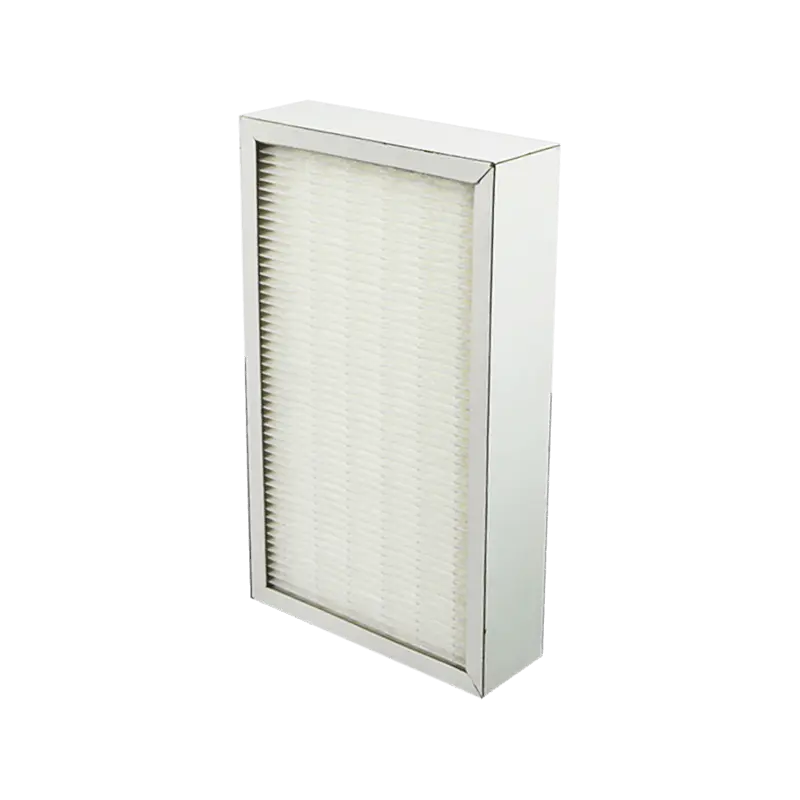
| H13 V-Bank air filter | H13; fiberglass and polypropylene; commercial and public buildings such as airports, hotels, museums and restaurants. | EN 1822 for HEPA classification. | H13 report, V-Bank construction identity, media match and application fit. | Using a generic H13 statement without the V-Bank model and without an EN 1822 basis. |
| H13 aerospace cabin air filter | H13; microfiberglass; B737/B757 electronic cabin application; customized dimension and fresh-system match. | EN 1822 for H13; aviation acceptance route to be confirmed separately. | H13 evidence, drawing and dimensional control, material match, traceability and current certificate evidence. | Assuming ISO 9001 or ISO 14001 certificates equal airworthiness approval. |
| MERV 8/11/13 furnace air filter | MERV 8, MERV 11 and MERV 13; polypropylene; commercial and public buildings, including furnace replacement use. | ASHRAE 52.2 and the declared MERV value. | Report showing the exact MERV, ASHRAE 52.2 test basis and model match. | Mixing MERV with F or G classes without a documented cross-reference. |
| MERV 15/16 box air filter | MERV 15 and MERV 16; microfiberglass; pharmaceutical plants, hospitals and food and beverage production sites. | ASHRAE 52.2 and the declared MERV value. | Exact MERV, media, product identity and application declaration. | Using MERV 16 to imply EN 1822 HEPA equivalence without a separate report. |
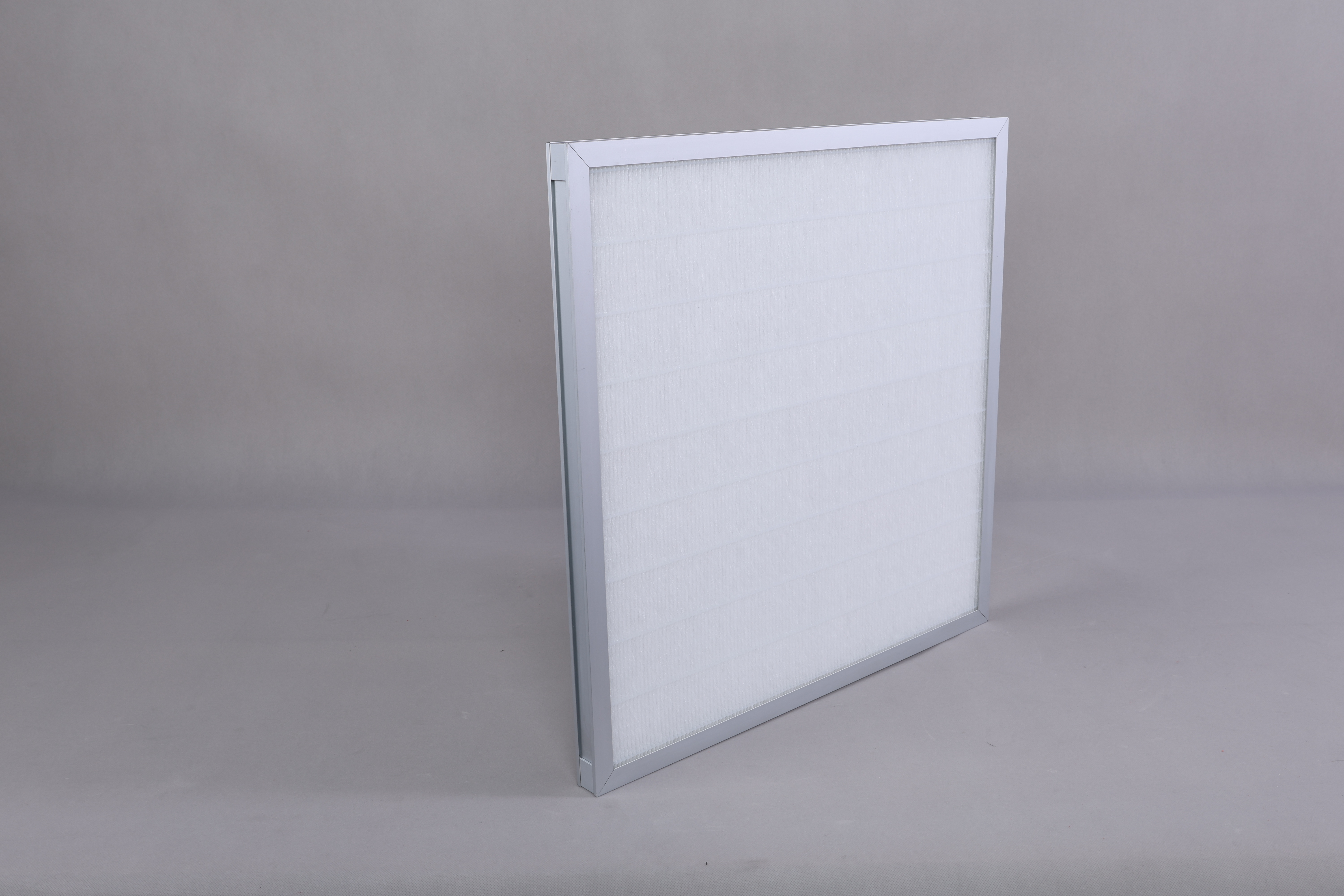
| G1-G4 panel air filter | G1-G4; fiberglass and polypropylene; commercial and public buildings. | EN 779 legacy class language; current ISO 16890 reference to be confirmed. | Standard behind the G class, media, model and documented cross-reference if ISO 16890 is required. | Accepting G4 as an automatic ISO class without the mapping document. |
| F5-F9 bag air filter | F5-F9 class family. A specific media is not stated in the available product data, so it must be declared for the exact item. | EN 779 legacy class language; EN 779 has been replaced by ISO 16890 in Europe since mid-2018. | Current standard, media declaration, model and documented cross-reference where the buyer requires ISO 16890. | Treating F7 as equal to MERV 13 or H13 without evidence, or copying media from another filter family. |
Where the Matrix Changes the Buying Decision
Cleanroom air filters: U14/U15
For cleanrooms, microelectronics and data centers, the buyer is not only purchasing a high-efficiency filter. The buyer is controlling a classified environment. The matrix should record the U14/U15 claim, the microfiberglass and PTFE media, the exact cleanroom air filter model, and the EN 1822 report. If the tender also states a leakage requirement, the report and acceptance record must show how that requirement is addressed. A grade label alone does not prove that the delivered filter matches the tested construction.
Commercial HVAC: H13 V-Bank and pre-filtration
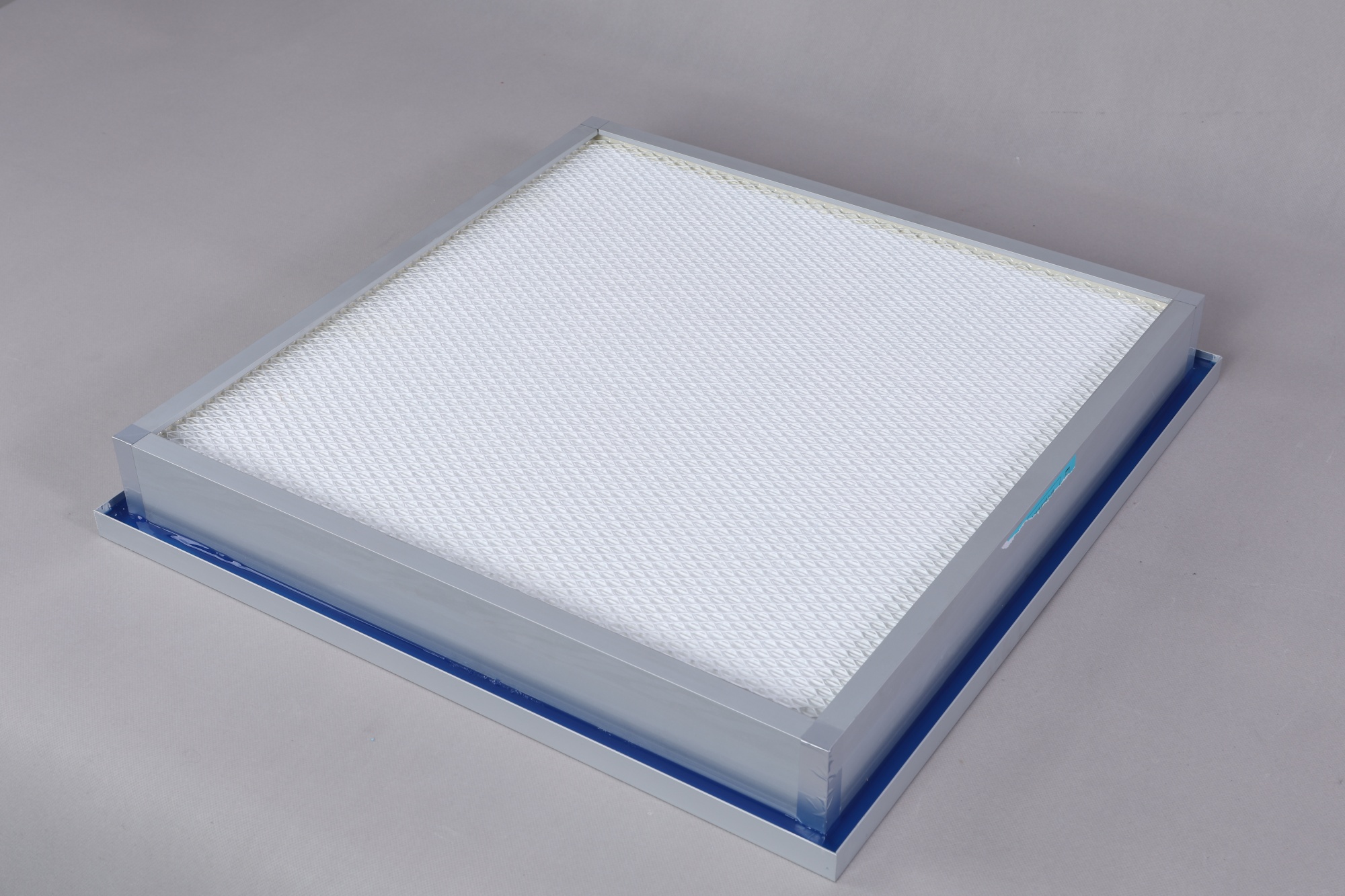
Commercial and public buildings often combine high-efficiency final filtration with lower-grade pre-filtration. The H13 V-Bank filter is stated with fiberglass and polypropylene for airports, hotels, museums and restaurants. The G1-G4 panel filter is stated with fiberglass and polypropylene for similar commercial and public buildings. These are different duties. The matrix should not let one grade approval cover the other. If the tender uses a G4 panel as pre-filtration and an H13 V-Bank as final filtration, each row needs its own standard, report and model identity.
Hospital, pharmaceutical and food production: MERV 15/16 box
The MERV 15/16 box filter is stated with microfiberglass for pharmaceutical plants, hospitals and food and beverage production sites. The tender may treat MERV 15 and MERV 16 as one family, but the acceptance record should keep the exact MERV value. ASHRAE 52.2 MERV is based on performance efficiency from synthetic-dust loading tests; the report should be checked for that basis, not only for a number printed on a datasheet. If the buyer needs HEPA or EN 1822 performance, that is a separate requirement and should have a separate row.
Aerospace cabin air: H13 and customized dimensions
The B737/B757 electronic cabin air filter is stated with H13 efficiency, microfiberglass media and customized dimensions for the fresh-system application. The matrix should separate three checks: the H13 performance evidence, the dimensional drawing and fit, and the aviation acceptance route required by the buyer. A quality-management certificate can support a supplier review, but it does not replace a product performance report or an aviation approval. If the tender does not state the aviation acceptance basis, mark it as an open item rather than inferring one.
Legacy bag filters: F5-F9
A tender that lists F5-F9 bag filters may still be using EN 779 class language. Because EN 779 was replaced by ISO 16890 in Europe from mid-2018, the first matrix question is whether the buyer requires the old EN 779 class, a current ISO 16890 report, or both with a documented cross-reference. The second question is the media. The available product data does not assign a specific media to the F5-F9 bag family, so the matrix should require a media declaration for the exact bag filter. Do not copy the media from the panel, box or V-Bank row.
Acceptance Criteria That Belong in Every Row
Acceptance criteria should be written as conditions, not aspirations. The following evidence categories cover the usual tender review. Add buyer-specific tests or documentation only when the tender actually states them.
| Evidence category | Accept when | Hold or reject when |
|---|---|---|
| Performance report | The report names the declared grade, the standard, the product family and the tested media. | The report uses a different standard, a different model or a media not offered for the tender line. |
| Certificate | The certificate shows issuer, certificate number, scope, issue date and expiry date, and it is current at tender review. | The certificate is expired, the scope does not cover the product or process, or only a logo is supplied. |
| Material declaration | The declared media matches the supported product data for that family. | The media is inferred from another family or is left blank without an open item. |
| Dimensional control | The drawing or datasheet matches the tender dimensions and the approved sample. | The item is described only as customized without a controlled drawing. |
| Sample approval | The sample is traceable to the production drawing, media and grade. | The sample has no identity link to the production item. |
| Commercial terms | The quotation states MOQ, lead time, inspection basis and after-sales support for the exact line. | A generic lead time or price is applied to a customized or high-efficiency item without confirmation. |
Certificate checks deserve their own column. Henkaes' available certificate records list ISO 9001:2015 certificate 04523Q30502R4M and ISO 14001:2015 certificate 04523E30387R2M, both issued by Beijing Dalu Hangxing Quality Certification Center Co., Ltd. on 2023-06-14 and expiring 2026-06-14. For a tender file reviewed after that expiry date, the matrix status should be current evidence required, not certified. A current renewal certificate may exist, but it must be supplied and checked before submission. This is exactly the kind of date check that a grade-only matrix misses.
Commercial Checks Do Not Prove Performance
Commercial data belongs in the tender file, but it should not be allowed to substitute for compliance evidence. Henkaes lists OEM/ODM customization for size and logo, a 500-piece MOQ, a 30-day lead time, monthly capacity of 200,000 pieces, 100% inspection and remote after-sales support. These are relevant to supply planning. They are not evidence that a specific U14/U15, H13 or MERV line meets the tender standard.
A practical matrix therefore adds commercial columns after the technical release columns: quoted MOQ, quoted lead time, inspection record, packaging requirement and after-sales contact. If the buyer requires a sample, record the sample lead time separately from the production lead time. If the tender includes a price schedule, keep the price line tied to the exact model and standard; do not allow a lower-grade substitute to carry the same price line without a documented change approval.
Frequently Asked Questions
Which standard should a tender cite for MERV, H13 and U14/U15 filters?
Use the standard that matches the grade framework. MERV values belong to ASHRAE 52.2. H13 and U14/U15 are commonly written in EN 1822 language for high-efficiency filters. If a tender mixes frameworks, add a separate standard column and require a report for each claim. Do not assume that MERV 16, H13 and U15 are interchangeable because they all describe high-efficiency filtration.
How should a buyer handle G1-G4 and F5-F9 when EN 779 has been replaced?
Treat the old class as a legacy reference and ask for the current standard. EN 779 was replaced by ISO 16890 in Europe from mid-2018. If the tender still requires G1-G4 or F5-F9, the supplier should state whether the offer uses an EN 779 report, an ISO 16890 report, or a documented cross-reference accepted by the buyer. A grade label without that statement is incomplete.
What evidence should accompany an H13 aerospace cabin filter?
The file should connect the H13 claim to the exact B737/B757 cabin filter model, the microfiberglass media, the controlled dimensions and the applicable performance report. The aviation acceptance route must be confirmed separately. ISO 9001 or ISO 14001 certificates can support a supplier review, but they do not establish airworthiness approval or product performance by themselves.
Can a supplier use one price or lead time for all air filter grades?
No. A customized high-efficiency filter and a standard panel filter do not carry the same manufacturing and inspection burden. Henkaes lists a 500-piece MOQ, a 30-day lead time, monthly capacity of 200,000 pieces and 100% inspection, but these are commercial reference points. The tender should require a line-item quotation that states the exact model, grade, standard, MOQ, lead time and inspection basis.
What sample and lead-time checks should be added before award?
Record the sample model, media, grade and drawing, then link the approved sample to the production item. Keep sample timing separate from the 30-day production lead time reference. If the tender requires a pre-production sample, state who approves it and what evidence closes the approval. A sample that cannot be traced to the production construction is not a compliance sample.
For a tender file that needs a starting point, a sample request and the current air filter catalogue can be used as the next practical step before finalizing the matrix.
Conclusion: A Matrix Is a Control Document
The value of an air filter compliance matrix is not that it lists many grades. It is that every grade has a standard, every standard has evidence, and every evidence item has a current status. U14/U15 cleanroom filters, H13 V-Bank and aerospace filters, MERV 8/11/13 furnace filters, MERV 15/16 box filters, G1-G4 panel filters and F5-F9 bag filters all need that treatment. Where the tender does not state the standard, the media or the certificate status, the correct matrix entry is conditional, not approved.
For procurement teams, this discipline reduces post-award disputes. For manufacturing teams, it turns a tender response into a controlled checklist rather than a phrase-matching exercise. Henkaes' product data and OEM/ODM information can support the technical review, but the buyer should still confirm purchasing terms and every claimed certification on the current documents. The air filter catalogue is available here: E-Catalogue for Air Filter 1.pdf.
Have Questions or Need More Details?
Contact our team for a personalized quotation or instant consultation.
Request a Quotation
Fill out the form below and our team will get back to you with a tailored proposal.
WhatsApp Direct Chat
Prefer to chat in real-time? Message us on WhatsApp for instant assistance & quick answers.
- Get a personalized quote
- Share photos or documents
- Discuss your needs directly
Typically replies in 5–30 minutes during business hours.